One important lesson I learned during my sister's wedding this past weekend: make every effort to avoid cracking your right thumbnail an hour prior to playing a set of classical guitar music in front of a few hundred family members, friends and strangers. A second, but equally-important lesson: fingernail glue combined with clear nail polish can work wonders in a bind. (Let's keep the bit about the nail polish between you and me, though. Deal?)
Other than that slight bit of drama, the wedding was great. My sister looked beautiful and radiant with joy. Her new husband is such a great guy and a welcome addition to the family. (I know the bride is supposed to be the focus, but I must mention that Allison looked quite lovely in her bridesmaid dress. And if you'll pardon the digression, why can married ladies be referred to as "matrons of honor" but never "bridesmatrons"? I don't get it.) And most importantly, the wedding service was truly a celebration of God's goodness to us through Christ, working actively in the lives of two people He has called together in marriage.
Another lesson I learned, this one from the after-rehearsal dinner: if you are going to play music with a bunch of folks, it's always good to learn the song more than five minutes prior to hitting the stage. The dinner was held at the Hank Williams Museum (in Montgomery), which actually has a cool meeting/reception area upstairs, complete with a stage. My sister and (now) brother-in-law were in a rock band in college, and they all re-united for a few songs during the after-rehearsal festivities. Who was I to deny their request to come onstage and play guitar on a few country songs, in honor of the hallowed halls in which we stood? It was a lot of fun.
Tuesday, March 28, 2006

Thursday, March 23, 2006
The Medium of Blogging and MySpacing
Tim Gallant has some great -- and convicting -- thoughts on both the challenges brought by the internet media and the seriousness with which Christians should address them.
Wednesday, March 22, 2006
Stuff and Such
Business lunches aren't always the most enjoyable, but any meeting is made better when catered by Fat Matt's Rib Shack. That meeting was yesterday, but I'm still thinking about the ribs. Oh yeah.
Things have been a bit crazy around these parts, with a funeral last weekend and my sister's wedding this coming weekend. Lots of conflicting emotions, plus a fair amount of driving to and from the Heart of Dixie.
Funerals usually aren't a lot of fun, but the service for Allison's Uncle Joe has really resonated with me over the last few days. I had only known Joe for a few years, and definitely not in any deep and meaningful way. Nonetheless, I was highly encouraged by his life, as recounted by his pastor during the funeral service. Joe served his church and others in countless ways, and the pastor commended him as an example of faithfulness. I think the reason why this message has lingered in my mind is that Joe was commended for his faithfulness in the "small things," such as cleaning the church sanctuary week in and week out, serving as a church greeter or accompanying the pastor on innumerable visitations. Joe showed great dedication towards many jobs that are often seen as insignificant or even undesirable.
In many ways, this kind of dependability is counter-cultural, because our society tends to value whatever is big, efficient and implemented on a large scale, all the while snubbing things having little perceivable impact. This pragmatic perspective tends to reduce actions and pursuits into mere means that have little if any integrity beyond the ends towards which they are aimed. It's especially frustrating whenever churches and individual Christians (myself included) adopt these attitudes. Make no mistake: God often calls both churches and individuals to "great things," as defined in terms of size, visibility and impact. But God also works in the humble faithfulness of His people, even in the "mundane" details. It's a shame whenever such small-scale displays of obedience are disparaged. And, although I have no way to validate this belief, I have a hunch that God uses the amalgamation of small acts of obedience to accomplish far more sustained good than the less frequent dramatic "big" actions (although these certainly glorify God, as well!). Hearing about Uncle Joe's consistent faithfulness was a great exhortation to keep my eyes on the specific tasks already before me and not to be distracted by the greener pastures elsewhere.
Oh, and to tie this all together: BBQ ribs, like most Southern soul food, have their origins with plantation slaves (and other poor folk), who received the leftovers after their masters took the choice cuts of all the meat. Nevertheless, the slaves were able to take these unwanted and usually undesirable parts of meat and put them to good use in creating a style of cooking tasty food that has endured throughout the years and has been enjoyed by countless many. There's probably a parable in there somewhere.
Things have been a bit crazy around these parts, with a funeral last weekend and my sister's wedding this coming weekend. Lots of conflicting emotions, plus a fair amount of driving to and from the Heart of Dixie.
Funerals usually aren't a lot of fun, but the service for Allison's Uncle Joe has really resonated with me over the last few days. I had only known Joe for a few years, and definitely not in any deep and meaningful way. Nonetheless, I was highly encouraged by his life, as recounted by his pastor during the funeral service. Joe served his church and others in countless ways, and the pastor commended him as an example of faithfulness. I think the reason why this message has lingered in my mind is that Joe was commended for his faithfulness in the "small things," such as cleaning the church sanctuary week in and week out, serving as a church greeter or accompanying the pastor on innumerable visitations. Joe showed great dedication towards many jobs that are often seen as insignificant or even undesirable.
In many ways, this kind of dependability is counter-cultural, because our society tends to value whatever is big, efficient and implemented on a large scale, all the while snubbing things having little perceivable impact. This pragmatic perspective tends to reduce actions and pursuits into mere means that have little if any integrity beyond the ends towards which they are aimed. It's especially frustrating whenever churches and individual Christians (myself included) adopt these attitudes. Make no mistake: God often calls both churches and individuals to "great things," as defined in terms of size, visibility and impact. But God also works in the humble faithfulness of His people, even in the "mundane" details. It's a shame whenever such small-scale displays of obedience are disparaged. And, although I have no way to validate this belief, I have a hunch that God uses the amalgamation of small acts of obedience to accomplish far more sustained good than the less frequent dramatic "big" actions (although these certainly glorify God, as well!). Hearing about Uncle Joe's consistent faithfulness was a great exhortation to keep my eyes on the specific tasks already before me and not to be distracted by the greener pastures elsewhere.
Oh, and to tie this all together: BBQ ribs, like most Southern soul food, have their origins with plantation slaves (and other poor folk), who received the leftovers after their masters took the choice cuts of all the meat. Nevertheless, the slaves were able to take these unwanted and usually undesirable parts of meat and put them to good use in creating a style of cooking tasty food that has endured throughout the years and has been enjoyed by countless many. There's probably a parable in there somewhere.
Thursday, March 16, 2006
Tuesday, March 14, 2006
Grief
Always and everywhere it is a hard thing to lose a relative to death. Both of my grandmothers have passed away in the last four years. I lost an adopted Atlanta grandfather last November. And now, as of yesterday morning, my Uncle Joe has gone on to be with the Lord.
Everyone keeps asking me how I am. "Fine," I answer. But who can really say? Death hits hard. It is the last enemy. And so we grieve.
But it is a right and good and joyful thing to give thanks and praise in all times and seasons to our Lord and Savior. Therefore, I am thankful that my uncle is no longer suffering from the cancer that took his life.
I am also thankful for his unique life: the faith he was given, his interest in genealogy that took him to Paris to find our ancestor's name in Notre Dame Cathedral, his love of Confederate history, his too-big heart. He will be missed.
The funeral is on Friday, and so we will be driving to Alabama to celebrate his life in Christ-- as well as to mourn. "For everything there is a season..."
I know some of our "real life" friends read this blog. And if you do, you may know I have been planning to walk in a local Relay for Life in May, and have told stories to my students about my relatives who have suffered from cancer, including my uncle Joe. My mom is a cancer survivor. I know many, many friends who have relatives affected by cancer. If you are one of those people who feel like you absolutely must do something tangible, I would ask that you make a donation to the American Cancer Society using this website. Thanks.
Everyone keeps asking me how I am. "Fine," I answer. But who can really say? Death hits hard. It is the last enemy. And so we grieve.
But it is a right and good and joyful thing to give thanks and praise in all times and seasons to our Lord and Savior. Therefore, I am thankful that my uncle is no longer suffering from the cancer that took his life.
I am also thankful for his unique life: the faith he was given, his interest in genealogy that took him to Paris to find our ancestor's name in Notre Dame Cathedral, his love of Confederate history, his too-big heart. He will be missed.
The funeral is on Friday, and so we will be driving to Alabama to celebrate his life in Christ-- as well as to mourn. "For everything there is a season..."
I know some of our "real life" friends read this blog. And if you do, you may know I have been planning to walk in a local Relay for Life in May, and have told stories to my students about my relatives who have suffered from cancer, including my uncle Joe. My mom is a cancer survivor. I know many, many friends who have relatives affected by cancer. If you are one of those people who feel like you absolutely must do something tangible, I would ask that you make a donation to the American Cancer Society using this website. Thanks.
Monday, March 13, 2006
Weekend (Film) Recap

Why did we wait so long to see Wallace & Gromit in The Curse of the Were-Rabbit? (Although, I guess I have only myself to blame, since Allison has been wanting to see it for awhile.) I haven't laughed that hard or consistently in a long time. What a great film.
We also re-watched Harry Potter and the Goblet of Fire, freshly released to DVD. I think I'm going to need a few more viewings to decide whether it or Prisoner of Azkaban is the best of the Potter films.
Of course, this weekend we mainly enjoyed the Atlanta weather, which was sunny and 80 degrees. I just hope it doesn't turn out to be a False Spring.
Friday, March 10, 2006
Lent for the Liturgically-Challenged
In the comments for this post, Kennan writes:
These are some great questions, so here are some of Team Redd's (belated) thoughts on Lent, in no way comprehensive or authoritative. And a disclaimer: both of us grew up in the Methodist tradition, which acknowledges Lent but doesn't always promote strict observance. So, many of these thoughts are still works in progress.
1 First and foremost, observance of Lent is not commanded by the Scriptures. As a result, Christians cannot have their consciences bound to honor the season or to follow any of the specific observances associated with it.
2 On the other hand, as with many Christian traditions, there is much benefit to be found in observing Lent, as well as the church year in general. As a voluntary observance, Lent can be a useful time for building faith and discipline. But as Kennan notes, observance without understanding is rarely beneficial. So those who would endeavor to observe Lent (in whatever form) would do well to learn why the season is observed, what it is, and (perhaps just as importantly) what it is not. Lenten observances that are uninformed or superstitious threaten to instill, as the Apostle Paul might say, practices that "have indeed an appearance of wisdom in promoting self-made religion and asceticism and severity to the body, but they are of no value in stopping the indulgence of the flesh."
3 Christians have been observing the season of Lent for almost 2000 years in some form (although the specific practices have developed and diversified over the centuries). By observing Lent, we demonstrate our connection to the faithful who have gone before us, and we offer a reminder that Christ's Church extends throughout history and across the entire globe. Those who would write-off Lent with nothing more than a casual "that sounds pretty Roman Catholic to me!" impoverish themselves by their unfamiliarity with their spiritual ancestors.
4 The Scriptures speak to a broad range of human experiences, and the church year attempts to address the whole spectrum. As individuals, we naturally tend to gravitate to elements corresponding to our own affinities, but following the church year helps us avoid the neglect of the broader range of attitudes and responses. Lent helps us focus on self-control, discipline and patience.
5 Self-control, discipline and patience are ever-diminishing qualities in an affluent society fixated on instant gratification. Lent serves as a much-needed corrective to a very negative aspect of the surrounding culture.
6 The corrective should never be seen as an end in itself. Growing in our sanctification should cause us to focus more clearly on our Lord. Fasting is a prominent part of Lent because it is meant to help us more clearly identify our need for God. Self-denial can easily become a source of pride and arrogance when misused, but when used properly, it can help to amplify our understanding of our dependence on God's gracious provision in all areas of life.
7 The idea of giving up something for Lent is an attempt to keep Christ as our sole object of worship. Lent shouldn't be about giving up something "bad" (e.g., cursing, gossip, etc.) for 40 days, because we should already be striving to rid ourselves of those things. Instead, Lenten fasting should be about preventing good things from turning into idols. As John Piper would argue, fasting (in general) is a weapon at our disposal to keep God's good gifts from supplanting Him as the sole object of our devotion.
8 Sundays should not be included in the 40 days of Lent. Although some traditions do include Sundays (most notably the Eastern church), the prevailing position views the Lord's Day as always a day of celebration of Christ's victory over sin and death.
9 Lent is not merely a period of privation and denial. The positive aspects of the season should include an increased focus on prayer, service/charity to others, and reading of the Scriptures. Granted, these activities should be part and parcel of the Christian life, anyway, but Lent should serve to intensify obedience in these areas.
10 Most importantly, Lent is a season of preparation for celebrating Easter. Obviously, Christians should celebrate Christ's resurrection every day, from every worship service to every devotional time to every act of love and obedience -- in every waking hour. But Easter is a time for focusing our attention on the most crucial event in history -- the act without which our faith would be in vain. Lent is a preparatory time to amplify our celebration of the Resurrection on Easter Day.
There's much more that could be said, but I'll simply defer to those who have already said it better.
For further reading:
"Keeping a Holy Lent" (from Trinity Presbyterian Church in NY)
"All About Lent!" (from churchyear.net)
A Hunger for God (by John Piper, on fasting in general)
For those of us who grew up in liturgically-challenged Protestant churches in the States, I'd be interested to know of a good source for information on the lenten season. Why no meat on Fridays (particularly when some scholars would suggest a Thursday or even Wednesday crucifiction might have been more likely)? Why fast one thing? What does it all mean?
Rather than simply not caring to observe the church year, I think that many Baptist-type protestants in the States (myself included) have never been made aware of why these observances can be a meaningful part of the Christian walk. Following the tradition without knowing what it means is not something I have ever found beneficial.
These are some great questions, so here are some of Team Redd's (belated) thoughts on Lent, in no way comprehensive or authoritative. And a disclaimer: both of us grew up in the Methodist tradition, which acknowledges Lent but doesn't always promote strict observance. So, many of these thoughts are still works in progress.
There's much more that could be said, but I'll simply defer to those who have already said it better.
For further reading:
"Keeping a Holy Lent" (from Trinity Presbyterian Church in NY)
"All About Lent!" (from churchyear.net)
A Hunger for God (by John Piper, on fasting in general)
For He's a Challies Good Fellow

Just wanted to plug the blog of Tim Challies, who (in addition to his steady stream of great posts) seemingly always has great contests and cool giveaways via his site. Team Redd was fortunate to snag a copy of Nancy Pearcey's Total Truth: Liberating Christianity from Its Cultural Captivity, which we've been wanting to read for some time. The book (hardcover, no less) showed up in the mail this week, and we're pretty pumped.
PS Sorry about the cheesy subject line.
Thursday, March 09, 2006
BSC Responds
This morning, I turned on the TV to see BSC's Norton Campus Center, with the eponymous Edwards Belltower in the background, broadcast on Good Morning America: "the college is waking up this morning with questions." Who isn't? It was incredibly surreal to see my college campus center on national television.
Yesterday, in response to the arrest of two arsonists on campus, BSC sent out a press release. In an age where reconciliation and redemption are so often forgotten, I was proud of this statement:
One of the reasons I chose to go to BSC was the college's emphasis on serving the community. I'm hoping that some of the widespread press will focus on the efforts of the college to help rebuild the churches. In fact, if I was a betting person, I'd put money down that someone at the school had already been planning to send a team to help with the rebuilding projects before they knew that any BSC students were involved in the arsons. That's just the way most of the students, faculty and staff are wired-- they seek to help where help is needed.
And for Mary, who asked below if there was a motive-- the only thing they've said so far is that it was a joke that got out of hand; however, these biographical articles shed some light on their personalities (and some of the reporter's descriptions make me laugh). Who could've forseen ten years ago that the media would be quoting blogs for research? At least there are some quotes from people who actually knew the boys in real life. If I were them, I would delete any facebook/myspace/blog sites I had immediately.
I hope that Moseley, et al don't get off somehow as misunderstood. Serving time in jail hopefully will wake them up to the seriousness of their actions. Multiple communities have lost their central meeting place because of a couple of late-night detructive sprees. Growing up in a small town, I experienced the power of the local church's influence in the community. Perhaps because they didn't grow up in a rural area, they didn't realize this, but I still can't understand what kind of person would return to more churches and start more fires in order to selfishly cover their tracks. A very confused person, I imagine. I join with others in praying for the boys and their families, as well as those affected by the fires.
Yesterday, in response to the arrest of two arsonists on campus, BSC sent out a press release. In an age where reconciliation and redemption are so often forgotten, I was proud of this statement:
"The entire community of Birmingham-Southern College—students, faculty, and staff—pledges to aid in the rebuilding of these lost churches through our resources and our labor. Together we’ll stand as a reminder of the strength of communities that transcend the differences of religion and place, as well as the effects of mindless cruelty."
One of the reasons I chose to go to BSC was the college's emphasis on serving the community. I'm hoping that some of the widespread press will focus on the efforts of the college to help rebuild the churches. In fact, if I was a betting person, I'd put money down that someone at the school had already been planning to send a team to help with the rebuilding projects before they knew that any BSC students were involved in the arsons. That's just the way most of the students, faculty and staff are wired-- they seek to help where help is needed.
And for Mary, who asked below if there was a motive-- the only thing they've said so far is that it was a joke that got out of hand; however, these biographical articles shed some light on their personalities (and some of the reporter's descriptions make me laugh). Who could've forseen ten years ago that the media would be quoting blogs for research? At least there are some quotes from people who actually knew the boys in real life. If I were them, I would delete any facebook/myspace/blog sites I had immediately.
I hope that Moseley, et al don't get off somehow as misunderstood. Serving time in jail hopefully will wake them up to the seriousness of their actions. Multiple communities have lost their central meeting place because of a couple of late-night detructive sprees. Growing up in a small town, I experienced the power of the local church's influence in the community. Perhaps because they didn't grow up in a rural area, they didn't realize this, but I still can't understand what kind of person would return to more churches and start more fires in order to selfishly cover their tracks. A very confused person, I imagine. I join with others in praying for the boys and their families, as well as those affected by the fires.
Wednesday, March 08, 2006
BSC in the news
Sadly, my little-known alma mater made the national news today not because of any outstanding accolades, but because two of the three church arsonists in AL were BSC students.
Sometimes I just don't understand how supposedly "bright" people can do such stupid things. I'm sure someone in the media will pick up that BSC is affiliated with the United Methodist Church and draw some crazy conclusions. But really, what kind of "joke" is it to burn down a group of Baptist churches?
And though, thankfully, this is not as serious as the UNC incident (no one was hurt), I echo Kristen when I say that our world is indeed a very broken place.
Sometimes I just don't understand how supposedly "bright" people can do such stupid things. I'm sure someone in the media will pick up that BSC is affiliated with the United Methodist Church and draw some crazy conclusions. But really, what kind of "joke" is it to burn down a group of Baptist churches?
And though, thankfully, this is not as serious as the UNC incident (no one was hurt), I echo Kristen when I say that our world is indeed a very broken place.
Deep Thoughts, by Lemony Snicket
A man of my acquaintance once wrote a poem called "The Road Less Traveled," describing a journey he took through the woods along a path most travelers never used. The poet found that the road less traveled was peaceful but quite lonely, and he was probably a bit nervous as he went along, because if anything happened on the road less traveled, the other travelers would be on the road more frequently traveled and so couldn't hear him as he cried for help. Sure enough, that poet is now dead.The Slippery Slope (A Series of Unfortunate Events, Book 10)
Tuesday, March 07, 2006
The Simpsons Come Alive?
"Makers of the hit cartoon The Simpsons have a filmed the show's opening titles using real actors."
This clip is pretty cool, actually, with a lot of attention given to reproducing the animated version down to the most minute details.
Edit: The clip is no longer available from The Sun link above, but you can find it over at YouTube. (Thanks to richard for the heads-up.)
This clip is pretty cool, actually, with a lot of attention given to reproducing the animated version down to the most minute details.
Edit: The clip is no longer available from The Sun link above, but you can find it over at YouTube. (Thanks to richard for the heads-up.)
Monday, March 06, 2006
The McPassion
I'm pretty sure there's only one word that even comes close to describing this:
Sacri-licious.
(Thanks to Allison for bringing this to my attention.)
Sacri-licious.
(Thanks to Allison for bringing this to my attention.)
In the Morning in the Winter Shade

Today is Casimir Pulaski Day. Be sure to celebrate appropriately.
(Note: For the sake of accuracy, the Sufjan lyric should actually read "On the first [Monday] of March on the holiday.")
Wednesday, March 01, 2006
Ash Wednesday
A professor once asked us to list three poets we would like to study if we could spend all our life reviewing and analyzing their body of literary work. T.S. Eliot was at the top of my list.
Here, appropriately for today, is an excerpt from part III of "Ash Wednesday," one of my favorites. You may want to read the entire poem here, and note the repetitions and rhythm of the whole. I will be puzzling through this poem for years--I see something new upon each read.
--T.S. Eliot
Here, appropriately for today, is an excerpt from part III of "Ash Wednesday," one of my favorites. You may want to read the entire poem here, and note the repetitions and rhythm of the whole. I will be puzzling through this poem for years--I see something new upon each read.
At the first turning of the second stair
I turned and saw below
The same shape twisted on the banister
Under the vapour in the fetid air
Struggling with the devil of the stairs who wears
The deceitul face of hope and of despair.
At the second turning of the second stair
I left them twisting, turning below;
There were no more faces and the stair was dark,
Damp, jagged, like an old man's mouth drivelling, beyond repair,
Or the toothed gullet of an aged shark.
At the first turning of the third stair
Was a slotted window bellied like the figs's fruit
And beyond the hawthorn blossom and a pasture scene
The broadbacked figure drest in blue and green
Enchanted the maytime with an antique flute.
Blown hair is sweet, brown hair over the mouth blown,
Lilac and brown hair;
Distraction, music of the flute, stops and steps of the mind over the third stair,
Fading, fading; strength beyond hope and despair
Climbing the third stair.
Lord, I am not worthy
Lord, I am not worthy
but speak the word only.
--T.S. Eliot
Lenten Public Service Announcement
If you are going to observe Lent (a practice I would generally recommend, but that's another topic), please remember the instructions Jesus gave about fasting:
An example of how NOT to observe Lent with the above mindset? Repeatedly remind your co-workers that "I can't eat meat today," regardless of whether the conversation is about Lent, lunch options or food in general.
End transmission.
And when you fast, do not look gloomy like the hypocrites, for they disfigure their faces that their fasting may be seen by others. Truly, I say to you, they have received their reward. But when you fast, anoint your head and wash your face, that your fasting may not be seen by others but by your Father who is in secret. And your Father who sees in secret will reward you.
An example of how NOT to observe Lent with the above mindset? Repeatedly remind your co-workers that "I can't eat meat today," regardless of whether the conversation is about Lent, lunch options or food in general.
End transmission.
Tuesday, February 28, 2006
Eric Peters Release Day

Today is release day for Scarce, the new album from Eric Peters. Unfortunately, if you did not take advantage of the pre-order discount, it is now too late to rake in the savings. However, even at full price, Scarce is worth every penny -- and then some! It certainly is a great album, and you should buy your "copy" (aka multiple copies for self, friends and family) today.
Plus, be sure to check out the newly-renovated Eric Peters website.
Sunday, February 26, 2006
The Transfiguration
(Sufjan Stevens)
When he took the three disciples
to the mountainside to pray,
his countenance was modified, his clothing was aflame.
Two men appeared: Moses and Elijah came;
they were at his side.
The prophecy, the legislation spoke of whenever he would die.
Then there came a word
of what he should accomplish on the day.
Then Peter spoke, to make of them a tabernacle place.
A cloud appeared in glory as an accolade.
They fell on the ground.
A voice arrived, the voice of God,
the face of God, covered in a cloud.
What he said to them,
the voice of God: the most beloved son.
Consider what he says to you, consider what's to come.
The prophecy was put to death,
was put to death, and so will the Son.
And keep your word, disguise the vision 'till the time has come.
Lost in the cloud, a voice. Have no fear! We draw near!
Lost in the cloud, a sign. Son of man! Turn your ear.
Lost in the cloud, a voice. Lamb of God! We draw near!
Lost in the cloud, a sign. Son of man! Son of God!
When he took the three disciples
to the mountainside to pray,
his countenance was modified, his clothing was aflame.
Two men appeared: Moses and Elijah came;
they were at his side.
The prophecy, the legislation spoke of whenever he would die.
Then there came a word
of what he should accomplish on the day.
Then Peter spoke, to make of them a tabernacle place.
A cloud appeared in glory as an accolade.
They fell on the ground.
A voice arrived, the voice of God,
the face of God, covered in a cloud.
What he said to them,
the voice of God: the most beloved son.
Consider what he says to you, consider what's to come.
The prophecy was put to death,
was put to death, and so will the Son.
And keep your word, disguise the vision 'till the time has come.
Lost in the cloud, a voice. Have no fear! We draw near!
Lost in the cloud, a sign. Son of man! Turn your ear.
Lost in the cloud, a voice. Lamb of God! We draw near!
Lost in the cloud, a sign. Son of man! Son of God!
Saturday, February 25, 2006
Triple Word Score
Last night, we played a rousing game of Scrabble with some good friends. It had been a long while since I'd played America's favorite board game, even the travel version, and it was the first time in recent memory in which the group used up every single letter. We all got lucky at the end with words like "ti" and "za," expecially me, because my last two letters were a "V" and the dreaded "X," which I picked up last from the pile. At one point, I almost had a "vex" but my spot was stolen from me by a fellow player. Thankfully, I was able to finish off using "ex" and "vas" which I never even knew were actual words until I tried them last night. All our words were verified by Kennan's official Scrabble Dictionary so everything was perfectly legal. Just look at this beautiful board! (Yes, I am a nerd who is not ashamed to post about playing board games!)


Friday, February 24, 2006
Following Austen
A fellow Jane Austen fan took a trip to England last summer to visit the places connected with that famous female author, and is slowly posting bits and pieces of her story on her blog.
I find her stories utterly fascinating and am looking forward to reading the archives. So far, I've discovered that Jane's brothers attended St. John's College, Oxford, which I wish I'd known when I lived and studied there for almost two months during the summer of 2001. I did love St. John's garden, and I even had a favorite tree that I would often sit in, curled up with a book (sometimes something by Austen herself), during a free afternoon. Oh, the looks I received from visitors!
I find her stories utterly fascinating and am looking forward to reading the archives. So far, I've discovered that Jane's brothers attended St. John's College, Oxford, which I wish I'd known when I lived and studied there for almost two months during the summer of 2001. I did love St. John's garden, and I even had a favorite tree that I would often sit in, curled up with a book (sometimes something by Austen herself), during a free afternoon. Oh, the looks I received from visitors!
Thursday, February 23, 2006
Four Spirits
Yesterday, while driving in the rain from Geneva, Alabama, north to Atlanta, I listened to NPR. I mostly listen only during long lonely car rides when both music and recorded lectures start getting old. Anyway, a blurb about Reverend Fred Shuttlesworth's visit yesterday to Birmingham to rally in favor of Phillips High School as a historical landmark caught my attention. It reminded me that I've been meaning to review a novel I read recently. And it also left me time to reflect.
You may be wondering, "Who is Fred Shuttlesworth?" Well, he's a lesser-known and highly-respected Civil Rights leader, a preacher who spent the early years of the movement suffering for the cause of equality amid bombings, riots, and firehoses in the Magic City of Birmingham.
I first encountered this living legend at a memorial service on the 37th anniversary of the September 15, 1963, bombing of Sixteenth Street Baptist Church, in which the lives of four little girls were brutally extinguished. I was covering the service for the school paper, as well as for credit for a course entitled "Civil Rights and Justice." But I hope I might have gone anyway, if only to hear the man preach. Rev. Shuttlesworth struck me first as a powerful speaker, but what held my attention was his faithfulness to proclaim true unity and equality in Christ alone. His unique experiences provided a strong witness to his theology of suffering and the cross. You can read more about his life online in this book review or you may want to check out the book itself.
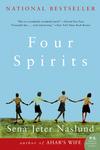 Though he is not a central character of Sena Jeter Nashlund's loosely historical novel Four Spirits, Reverend Shuttlesworth figures prominently during the first half of the book. He also serves as a motivating force for many of the characters who continue to fight for equal rights because of his influence. His interplay among the varied voices Naslund presents provides one of the many reasons I would endorse Four Spirits as a must-read for anyone interested in the struggles of the Civil Rights Movement. He is figured prominently and accurately as a fiery champion of the local working-class black people, set against King's more refined influence among the national media.
The book itself comprises the viewpoints of a diverse cast of characters, from a fierce single black mother buoyed by the momentous events swirling around her to an almost stereotypically cruel member of the KKK. However, the events of the novel are most often seen through the eyes of Stella, a white student at Birmingham-Southern College, who feels caught up in the pulse of the movement despite her quiet nature. Along with Stella, the reader grieves at the death of JFK and mourns the loss of civil rights protestors. From her vantange point atop Vulcan she is oblivious to Bull Connor's brutal attacks, though other characters offer a portrait of the protests in harsh detail. Naslund focuses in and out of scenes with telescopic precision, weaving stories of both fictional and historical events from the perspectives of participants, spectators, and agitators. Most notably, she magnifies the Sixteenth Street Baptist Church bombing so that the murder of four innocent girls resonates throughout the novel.
Though I only lived in Birmingham for four years, I know the streets, the monuments, the buildings featured in Four Spirits. I only saw the aftermath, of course: the Birmingham Civil Rights Museum has replaced Bull Connor's firetrucks and the 16th Street church appears solid once more. However, because of my experience growing up in lower Alabama, even twenty to thirty years after the events portrayed here, I still felt the tension, the heated emotion, and the injustice that remains because of individuals' refusal to be blind to skin color. My personal connections only served to heighten my reading experience, as I tried to imagine Birmingham's landmarks in their 1960's guise.
However, what affected me the most was the historic connection in Nashlund's novel between two colleges-- Birmingham-Southern, my (and Nashlund's) alma mater, and Miles, a historically black college less than 5 miles away. In the 1960's, students from both colleges taught together at an integrated night school, in a dangerous experiment in racial reconciliation.
In a parallel encounter, while I was a student at 'Southern in the late 90's, our InterVarsity chapter partnered with students from Miles in ministry and service, and that intercollegiate relationship continues to flourish to this day. In reading this novel, I not only encountered a unique perspective on Birmingham's history, I also discovered my place within that same, ongoing narrative. Though we are told to study history lest we are doomed to repeat it, sometimes, history repeats itself in order to continue a narrative that wasn't yet finished. I pray the current students at Miles and BSC would continue to build bridges of reconciliation between the two campuses so that "Bombingham" may remain a thing of the past.
You may be wondering, "Who is Fred Shuttlesworth?" Well, he's a lesser-known and highly-respected Civil Rights leader, a preacher who spent the early years of the movement suffering for the cause of equality amid bombings, riots, and firehoses in the Magic City of Birmingham.
I first encountered this living legend at a memorial service on the 37th anniversary of the September 15, 1963, bombing of Sixteenth Street Baptist Church, in which the lives of four little girls were brutally extinguished. I was covering the service for the school paper, as well as for credit for a course entitled "Civil Rights and Justice." But I hope I might have gone anyway, if only to hear the man preach. Rev. Shuttlesworth struck me first as a powerful speaker, but what held my attention was his faithfulness to proclaim true unity and equality in Christ alone. His unique experiences provided a strong witness to his theology of suffering and the cross. You can read more about his life online in this book review or you may want to check out the book itself.
 Though he is not a central character of Sena Jeter Nashlund's loosely historical novel Four Spirits, Reverend Shuttlesworth figures prominently during the first half of the book. He also serves as a motivating force for many of the characters who continue to fight for equal rights because of his influence. His interplay among the varied voices Naslund presents provides one of the many reasons I would endorse Four Spirits as a must-read for anyone interested in the struggles of the Civil Rights Movement. He is figured prominently and accurately as a fiery champion of the local working-class black people, set against King's more refined influence among the national media.
The book itself comprises the viewpoints of a diverse cast of characters, from a fierce single black mother buoyed by the momentous events swirling around her to an almost stereotypically cruel member of the KKK. However, the events of the novel are most often seen through the eyes of Stella, a white student at Birmingham-Southern College, who feels caught up in the pulse of the movement despite her quiet nature. Along with Stella, the reader grieves at the death of JFK and mourns the loss of civil rights protestors. From her vantange point atop Vulcan she is oblivious to Bull Connor's brutal attacks, though other characters offer a portrait of the protests in harsh detail. Naslund focuses in and out of scenes with telescopic precision, weaving stories of both fictional and historical events from the perspectives of participants, spectators, and agitators. Most notably, she magnifies the Sixteenth Street Baptist Church bombing so that the murder of four innocent girls resonates throughout the novel.
Though I only lived in Birmingham for four years, I know the streets, the monuments, the buildings featured in Four Spirits. I only saw the aftermath, of course: the Birmingham Civil Rights Museum has replaced Bull Connor's firetrucks and the 16th Street church appears solid once more. However, because of my experience growing up in lower Alabama, even twenty to thirty years after the events portrayed here, I still felt the tension, the heated emotion, and the injustice that remains because of individuals' refusal to be blind to skin color. My personal connections only served to heighten my reading experience, as I tried to imagine Birmingham's landmarks in their 1960's guise.
However, what affected me the most was the historic connection in Nashlund's novel between two colleges-- Birmingham-Southern, my (and Nashlund's) alma mater, and Miles, a historically black college less than 5 miles away. In the 1960's, students from both colleges taught together at an integrated night school, in a dangerous experiment in racial reconciliation.
In a parallel encounter, while I was a student at 'Southern in the late 90's, our InterVarsity chapter partnered with students from Miles in ministry and service, and that intercollegiate relationship continues to flourish to this day. In reading this novel, I not only encountered a unique perspective on Birmingham's history, I also discovered my place within that same, ongoing narrative. Though we are told to study history lest we are doomed to repeat it, sometimes, history repeats itself in order to continue a narrative that wasn't yet finished. I pray the current students at Miles and BSC would continue to build bridges of reconciliation between the two campuses so that "Bombingham" may remain a thing of the past.
Wednesday, February 22, 2006
$12-1500 is a mighty nice price for a possum, don't you know?

A thread on the derekwebb board brought up memories of old bands, and so I went in search of Andy Cloninger, half of the duo that once was Dog Named David. If you've never heard their music, you should. And check out Andy's new stuff. Most importantly, the pictures on his website are AWESOMELY hilarious, including the one to the left.
What Does a Worship Leader Do?
Bob Kauflin is currently in the midst of a series of reflections defining the role of worship leaders in churches. I've enjoyed the series so far, but Part 12 has some really good thoughts on the great need for worship services to be structured with a central and explicit focus on the redemptive work of Christ. It should be obvious, but it is absolutely vital. Good stuff.
No Kidding
So, I was reading through an environmental assessment of an apartment building, and a couple of shower heads tested a little higher for lead than is comfortable. The consultants who performed the testing wrote:
"[consultant] recommends that these shower heads be replaced as soon as possible and that all the residents be advised not to drink water from the shower ports."
"[consultant] recommends that these shower heads be replaced as soon as possible and that all the residents be advised not to drink water from the shower ports."
Tuesday, February 21, 2006
Banjo Update
Practice is coming along pretty well, but I realize that I'm in need of a role model to help shape my development.
There are some obvious choices:


There is, of course, my original inspiration:

Some are far, far beyond my technical level:

But for now, I think this is about my speed:

There are some obvious choices:
There is, of course, my original inspiration:
Some are far, far beyond my technical level:
But for now, I think this is about my speed:
Monday, February 20, 2006
Update
Thankfully, Team Redd seems to have survived our bout with the flu. (Disclaimer: I'm not sure if I had a weaker form of Allison's flu or just a yucky cold.) Since neither of us felt like doing much productive, we ended up watching a bunch of movies over the last week. Here's my take, for what it's worth:
March of the Penguins - Who knew that penguins could be so entertaining? Despite the depressingly-desolate Antarctic setting, this documentary actually has some fairly emotional moments. Plus, Morgan Freeman has the perfect voice for narrating.
Coach Carter - This high school basketball film was decent, mainly due to Samuel L. Jackson's role as the title character. The movie had some very good emphases on the importance of discipline and respect, but the mixed messages on individualism and the portrayal of higher education as a cure-all left a bad taste in my mouth.
The Godfather - How did I manage to get this far through life without seeing this in its entirety? I'll tell you one thing: I'm going to be extra careful at toll plazas from now on.
The Thin Blue Line - I always enjoy the documentary work of Errol Morris, and this one is no exception. Providing a sobering look at the handling of a Texas murder case, this film actually helped to exonerate a man wrongly convicted of capital murder.
We also re-watched Castaway on TV. I still think Wilson should have been nominated for some kind of supporting role.
In music news, I obtained a pre-release copy of the new Caedmon's Call album, In the Company of Angels II: The World Will Sing. I might write some more about this later, but I can't deny that I was more than a little disappointed. This is not to say that it is horrible: not at all, for the album contains some good stuff. But, given the title, I was actually expecting a bit more "world" influence, especially since this album comes on the heels of Share the Well. But alas, it is not so.
March of the Penguins - Who knew that penguins could be so entertaining? Despite the depressingly-desolate Antarctic setting, this documentary actually has some fairly emotional moments. Plus, Morgan Freeman has the perfect voice for narrating.
Coach Carter - This high school basketball film was decent, mainly due to Samuel L. Jackson's role as the title character. The movie had some very good emphases on the importance of discipline and respect, but the mixed messages on individualism and the portrayal of higher education as a cure-all left a bad taste in my mouth.
The Godfather - How did I manage to get this far through life without seeing this in its entirety? I'll tell you one thing: I'm going to be extra careful at toll plazas from now on.
The Thin Blue Line - I always enjoy the documentary work of Errol Morris, and this one is no exception. Providing a sobering look at the handling of a Texas murder case, this film actually helped to exonerate a man wrongly convicted of capital murder.
We also re-watched Castaway on TV. I still think Wilson should have been nominated for some kind of supporting role.
In music news, I obtained a pre-release copy of the new Caedmon's Call album, In the Company of Angels II: The World Will Sing. I might write some more about this later, but I can't deny that I was more than a little disappointed. This is not to say that it is horrible: not at all, for the album contains some good stuff. But, given the title, I was actually expecting a bit more "world" influence, especially since this album comes on the heels of Share the Well. But alas, it is not so.
Thursday, February 16, 2006
Marva Dawn on Regent Radio
This week Regent Radio has a four-part series of lectures by Marva Dawn on "The Pastor and the Prophetic Ministry of Jesus" (from the 2004 Regent Pastor's Conference). The first part (which played yesterday) had a lot of good stuff on the need for Christians to be a prophetic voice, especially in an increasingly commodified society. Good stuff.
Wednesday, February 15, 2006
Ick

Sad to say, Team Redd has been battling off the forces of influenza lately. Unfortunately, Allison seems to have borne the brunt of it. This made for a fairly uneventful (and somewhat phlegm-y) Valentine's Day, although an ice cream treat seems to have helped us both. That, and high dosages of vitamin-power.
Monday, February 13, 2006
It Was Arrested Development

A moment of silence is in order, as the two-hour "season [aka series] finale" of Arrested Development aired on Friday night. Unlike many of my past favorite shows (*cough* X-Files *cough*), AD ended on a very high note. The conclusion was FANTASTIC, albeit bittersweet. There's a faint glint of hope that the show might get picked up on cable, but I'm not holding my breath.
Thank goodness for DVD.
Friday, February 10, 2006
Move Over, Sufjan!
Amidst my forays into poetry (assuming a very generous definition of the term) and determining how Derek Webb wants me to vote (just kidding), I've neglected to brag about something very cool: Allison got me the best Christmas present ever -- a banjo!
We actually didn't pick it up until mid-January, since our local music store was delayed in receiving a shipment of beginner-level banjos. (I'm not exactly sure from where they were getting the banjos, as the term "shipment" made me think they were being smuggled from South America, or at least from Appalachia. Either way, the goods eventually arrived.) In God's Providence, when we went to check them out, the store also had a higher-quality used banjo in the store (tucked away in a back room, actually). So we ended up getting a pretty good bargain. I've been having a lot of fun with it, although the banjo is a beastly instrument to learn. But I'm slowly getting the hang of it!
I am a little concerned, though. The friendly clerk at the music store warned me about the stereotypical banjo player: they have a reputation for being pretty carefree and a bit too laid-back. Apparently, the store has had a running problem with lining-up banjo teachers for lessons. Without fail, the instructors ended up being a tad flaky and totally unreliable, sometimes not even bothering to show up for class. Anyway, I guess the clerk felt he had to do his duty and give me proper disclosure before selling me my banjo. At least I didn't have to sign a waiver.
I hope to write more about my banjo-playing in the future. That is, if I feel like it. Or maybe not. Whatever, man.

We actually didn't pick it up until mid-January, since our local music store was delayed in receiving a shipment of beginner-level banjos. (I'm not exactly sure from where they were getting the banjos, as the term "shipment" made me think they were being smuggled from South America, or at least from Appalachia. Either way, the goods eventually arrived.) In God's Providence, when we went to check them out, the store also had a higher-quality used banjo in the store (tucked away in a back room, actually). So we ended up getting a pretty good bargain. I've been having a lot of fun with it, although the banjo is a beastly instrument to learn. But I'm slowly getting the hang of it!
I am a little concerned, though. The friendly clerk at the music store warned me about the stereotypical banjo player: they have a reputation for being pretty carefree and a bit too laid-back. Apparently, the store has had a running problem with lining-up banjo teachers for lessons. Without fail, the instructors ended up being a tad flaky and totally unreliable, sometimes not even bothering to show up for class. Anyway, I guess the clerk felt he had to do his duty and give me proper disclosure before selling me my banjo. At least I didn't have to sign a waiver.
I hope to write more about my banjo-playing in the future. That is, if I feel like it. Or maybe not. Whatever, man.
Thursday, February 09, 2006
Derek Webb and God's Politics -- Part 3
Derek Webb's album Mockingbird has a deliberate focus on the outworking of the Christian Gospel into areas of social concern, such as politics, poverty and war (see Part 1). Derek has oft-referenced Jim Wallis' book God's Politics as a major influence for the album; however, as I mentioned previously (see Part 2), I don't think Wallis makes a firm case for Christian action in his book. Not only does his misuse of Scripture lay a shaky foundation, but his proposals for action too often seem to invite the Church's dependence on the State. On the other hand, Derek's songs and public statements point to a much more solid framework from which to mobilize a Christian response to the same issues.
Whereas Wallis appeals to a nebulous "wisdom of the prophets," Derek proclaims:
At the very end of Matthew's gospel, the resurrected Christ proclaims, "All authority in heaven and on earth has been given to me." The fact of His sovereign rule is the basis for commissioning the disciples to go into the world to make more disciples, baptizing them into the Triune name. However, the Great Commission is not merely about getting people to assent to true propositions about forgiveness through Christ (i.e., "putting sentences into their heads"), because Jesus also instructs his followers that their new disciples should be taught "to observe all that I have commanded you." That "all" is the full-orbed kingdom life proclaimed both by Jesus and by the written Word of God to which He attests. Finally, Jesus promises, "Behold, I am with you always, to the end of the age." Not only does Jesus possess the kingly authority to reign over His people, He also empowers them (by His Spirit) to obey all that He has commanded and to expand His kingdom.
So what exactly has Christ instructed? I don't think one can seriously study the Gospels and not notice the attention that Jesus gives to those relegated to the lower rungs of society, whether on the basis of poverty, race, leprosy, etc. Sadly, I've encountered attempts to blunt the force of such passages by way of exegetical shenanigans. For example, the parable of the sheep and goats often becomes a battleground for discussing the issue of sola fide. But too often, such discussions (as important as they are) can end up obscuring the passage's main thrust on how to treat "the least of these." Similarly, as I mentioned in the previous installment, some Christians employ Jesus' statement that "the poor you will always have with you" as an excuse to downplay the Church's response to poverty (i.e., "well, this problem is always going to be around no matter what we do, so what's the use in trying to fix it?"). However, the opposite appears true: this passage actually highlights the fact that the Church will always have the poor around to serve. As I've encountered a number of Reformed-ish folks employing a deficient interpretation of this passage, I think it is appropriate to consult Calvin:
The exercise of Christian compassion to the poor (or others in need) is by God's design, because it displays His own love to the world. In recent concerts, Derek has stated that Christian charitable work is part of the Gospel announcement, because it proclaims a coming kingdom where God has made all things right. When Christians feed the poor or strive for peace, they declare a kingdom where there will be no hunger or strife. When Christians struggle to overcome racial and cultural prejudices, they announce a kingdom where all are truly one in Christ. Unfortunately, the eschatological weight of such statements is lost when we narrowly define the Gospel in terms of "what must we do to be saved?" I understand what those narrow definitions of the Gospel are trying to preserve, and Christians should be quite clear that no one will be saved because of their works of charity. But if the Gospel really is the good news about King Jesus and the coming of His kingdom, then we must declare what that kingdom looks like. In the end, there is no need to bifurcate "evangelism" and "works of mercy" because both are rolled into that Kingdom announcement. Christ's death and resurrection provide forgiveness of sins for the believer, but they also provide redemption from the effects of the Fall. Christian acts of charity and peacemaking are the Spirit-empowered outworkings of restoration.
Of course, none of this prescribes what form these restorative actions take. Obviously, the work of local churches and Christian organizations in directly meeting the needs (physical and spiritual) of the "least of these" cannot be encouraged enough. But what of larger-scale approaches, such as governmental policies advocated by Jim Wallis? I would humbly submit that Christians should be wary when advocating such actions, while admitting that the issue of how Christians should relate to the government is a complex one, with these posts merely grazing the surface. Christians can agree that all governments are empowered to protect citizens from harm and exploitation. Furthermore, it only seems reasonable that believers -- especially in a democratic republic -- should participate in the system at many levels to ensure that the government is doing its God-ordained job. However, Christians should not be so naive as to expect an ostensibly secular state (like the U.S.) to govern in accordance with Christian values. The more prudent course might be for churches to shift the focus away from grasping the political reins and onto proclaiming the Gospel and demonstrating the love of Christ to those in need. How much glory would be given to Christ if the government ended up cutting most public assistance programs because churches were already meeting those needs?
Granted, these suggestions are not nearly as well-defined as those proposed by Jim Wallis, but the complexity of these issues tends to rule out easy answers. Instead of demanding "a new law," Christians must exercise patience and wisdom in addressing social issues. At first glance, massive top-down solutions, such as government programs, may appear to provide faster results than the slow-and-steady expansion of isolated acts of compassion. But history shows that Christians have been able to transform whole societies by consistent proclamation of the Gospel in word and action, without the benefit of political might. Perhaps the best advice is for individual Christians and congregations to faithfully proclaim the kingdom and show grace in a myriad of seemingly-insignificant ways, all the while trusting God to weave these isolated acts together into something much greater.
Whereas Wallis appeals to a nebulous "wisdom of the prophets," Derek proclaims:
my first allegiance is not to a flag, a country, or a manDerek firmly roots Christian ethics in the Gospel proclamation that Christ is Lord over all; furthermore, he argues that Christ has set us free from sin through the cross so that we might use that freedom to do the work of His kingdom. Jesus' commands, as well as the canonical teachings of the prophets, have authority because He is the resurrected King of Kings and Lord of Lords, not because of some fuzzy notion of sagely wisdom.
my first allegiance is not to democracy or blood
it's to a king & a kingdom
At the very end of Matthew's gospel, the resurrected Christ proclaims, "All authority in heaven and on earth has been given to me." The fact of His sovereign rule is the basis for commissioning the disciples to go into the world to make more disciples, baptizing them into the Triune name. However, the Great Commission is not merely about getting people to assent to true propositions about forgiveness through Christ (i.e., "putting sentences into their heads"), because Jesus also instructs his followers that their new disciples should be taught "to observe all that I have commanded you." That "all" is the full-orbed kingdom life proclaimed both by Jesus and by the written Word of God to which He attests. Finally, Jesus promises, "Behold, I am with you always, to the end of the age." Not only does Jesus possess the kingly authority to reign over His people, He also empowers them (by His Spirit) to obey all that He has commanded and to expand His kingdom.
So what exactly has Christ instructed? I don't think one can seriously study the Gospels and not notice the attention that Jesus gives to those relegated to the lower rungs of society, whether on the basis of poverty, race, leprosy, etc. Sadly, I've encountered attempts to blunt the force of such passages by way of exegetical shenanigans. For example, the parable of the sheep and goats often becomes a battleground for discussing the issue of sola fide. But too often, such discussions (as important as they are) can end up obscuring the passage's main thrust on how to treat "the least of these." Similarly, as I mentioned in the previous installment, some Christians employ Jesus' statement that "the poor you will always have with you" as an excuse to downplay the Church's response to poverty (i.e., "well, this problem is always going to be around no matter what we do, so what's the use in trying to fix it?"). However, the opposite appears true: this passage actually highlights the fact that the Church will always have the poor around to serve. As I've encountered a number of Reformed-ish folks employing a deficient interpretation of this passage, I think it is appropriate to consult Calvin:
Again, when he says that the poor will always be with us, we infer from it, that if many are in poverty, this does not arise from accident, but that, by a fixed purpose, God presents to us those on whom our charity may be exercised. (Harmony of the Gospels)
The exercise of Christian compassion to the poor (or others in need) is by God's design, because it displays His own love to the world. In recent concerts, Derek has stated that Christian charitable work is part of the Gospel announcement, because it proclaims a coming kingdom where God has made all things right. When Christians feed the poor or strive for peace, they declare a kingdom where there will be no hunger or strife. When Christians struggle to overcome racial and cultural prejudices, they announce a kingdom where all are truly one in Christ. Unfortunately, the eschatological weight of such statements is lost when we narrowly define the Gospel in terms of "what must we do to be saved?" I understand what those narrow definitions of the Gospel are trying to preserve, and Christians should be quite clear that no one will be saved because of their works of charity. But if the Gospel really is the good news about King Jesus and the coming of His kingdom, then we must declare what that kingdom looks like. In the end, there is no need to bifurcate "evangelism" and "works of mercy" because both are rolled into that Kingdom announcement. Christ's death and resurrection provide forgiveness of sins for the believer, but they also provide redemption from the effects of the Fall. Christian acts of charity and peacemaking are the Spirit-empowered outworkings of restoration.
Of course, none of this prescribes what form these restorative actions take. Obviously, the work of local churches and Christian organizations in directly meeting the needs (physical and spiritual) of the "least of these" cannot be encouraged enough. But what of larger-scale approaches, such as governmental policies advocated by Jim Wallis? I would humbly submit that Christians should be wary when advocating such actions, while admitting that the issue of how Christians should relate to the government is a complex one, with these posts merely grazing the surface. Christians can agree that all governments are empowered to protect citizens from harm and exploitation. Furthermore, it only seems reasonable that believers -- especially in a democratic republic -- should participate in the system at many levels to ensure that the government is doing its God-ordained job. However, Christians should not be so naive as to expect an ostensibly secular state (like the U.S.) to govern in accordance with Christian values. The more prudent course might be for churches to shift the focus away from grasping the political reins and onto proclaiming the Gospel and demonstrating the love of Christ to those in need. How much glory would be given to Christ if the government ended up cutting most public assistance programs because churches were already meeting those needs?
Granted, these suggestions are not nearly as well-defined as those proposed by Jim Wallis, but the complexity of these issues tends to rule out easy answers. Instead of demanding "a new law," Christians must exercise patience and wisdom in addressing social issues. At first glance, massive top-down solutions, such as government programs, may appear to provide faster results than the slow-and-steady expansion of isolated acts of compassion. But history shows that Christians have been able to transform whole societies by consistent proclamation of the Gospel in word and action, without the benefit of political might. Perhaps the best advice is for individual Christians and congregations to faithfully proclaim the kingdom and show grace in a myriad of seemingly-insignificant ways, all the while trusting God to weave these isolated acts together into something much greater.
Yet Another Haiku for Lunchtime
Monthly team luncheon
Budget stymies Steak and Ale:
Neither's an option
(I think that's the last one for awhile. All apologies to Andy Gullahorn. And many thanks to the Vogons for all their inspiration.)
Budget stymies Steak and Ale:
Neither's an option
(I think that's the last one for awhile. All apologies to Andy Gullahorn. And many thanks to the Vogons for all their inspiration.)
Wednesday, February 08, 2006
Tuesday, February 07, 2006
Al Mohler on "The Recovery of Authentic Worship"
Al Mohler has begun a three-part series of commentary on worship, and if the first post is any indication, it will be pretty good.
The Whole Earth Is Full of His Glory: The Recovery of Authentic Worship, Part One
(Tip o' the hat to the BHT.)
The Whole Earth Is Full of His Glory: The Recovery of Authentic Worship, Part One
(Tip o' the hat to the BHT.)
Thursday, February 02, 2006
Georgia Groundhog Predicts Early Spring
Chew on that, Punxsutawney Phil!
It is worth noting that General Beauregard, according to his owner, has allegedly missed only one prediction in his career -- and that ended up being the year of a record-setting blizzard.
It's also worth noting once again that, per the article, Beau has received an honorary degree from the University [sic] of Georgia. [insert joke here]
It is worth noting that General Beauregard, according to his owner, has allegedly missed only one prediction in his career -- and that ended up being the year of a record-setting blizzard.
It's also worth noting once again that, per the article, Beau has received an honorary degree from the University [sic] of Georgia. [insert joke here]
iMonk Reviews Wright
Michael Spencer gives a glowing recommendation to N.T. Wright's Jesus and the Victory of God, the second installment of his Christian Origins series.
(To my regret, I did not persevere with the book when I first attempted it several years back. But my goal for this year is to read all three published volumes of the series. We'll see how that goes!)
(To my regret, I did not persevere with the book when I first attempted it several years back. But my goal for this year is to read all three published volumes of the series. We'll see how that goes!)
Tuesday, January 31, 2006
Derek Webb and God's Politics -- Part 2
 As I mentioned previously, Derek Webb's new album Mockingbird has an intentional focus on the outworking of the Christian faith, especially in social and political issues. To coincide with the album release, I read God's Politics: Why the Right Gets It Wrong and the Left Doesn't Get It by Jim Wallis, the founder of Sojourners, "a Christian ministry whose mission is to proclaim and practice the biblical call to integrate spiritual renewal and social justice." Derek notes that God's Politics played a significant role in shaping his recent work; however, he is quick to clarify that he appreciates Wallis for the challenges he raises, but definitely not for all of his conclusions and proposals. That, I think, is a decent evaluation of the book as a whole.
Wallis has a number of good things to say. He decries the tendency of "the Left" to marginalize or even exclude the role of religion in public affairs, and he frequently cites the Civil Rights Movement as a positive example of faith motivating social action. I think he is also correct in stating that "moral issues" should not be constrained to abortion and homosexuality only, as some conservatives tend to do (whether explicitly or by implication), because the Bible also speaks to issues of poverty, justice, race, etc. Christ is Lord over all, and I appreciate Wallis' challenge for Christians to evaluate how their faith impacts all spheres of life.
Wallis delivers no small amount of criticism against the Iraq War and the larger War on Terror, but I find his points to be a great deal more thoughtful than the usual barrage of "Bush lied" rhetoric. For instance, he does not stoop to justifying the actions of terrorists (i.e., "they are freedom fighters" or "the U.S. pushed them into this"), but rather, he openly acknowledges the presence of true evil in the world and in the actions of despots and terrorists. Even if I may not agree with some of his critiques, he makes some good points on the perils of preemptive war, especially in noting that horrors like civilian deaths and abuse of prisoners by "the good guys" tend to be an unavoidable product of war in general. Wallis does not try to argue that Bush intentionally deceived the public, but he does argue that the Iraq War has revealed that faulty intelligence can have dreadful consequences, especially if acted upon in a hasty manner. I think this is worth contemplating. Additionally, Wallis makes some excellent points about the ways in which the Bush administration has justified the War on Terror by taking biblical passages that refer to Jesus or the Church and then applying them to the United States (e.g., "The ideal of America is the hope of all mankind. That hope still lights our way. And the light shines in the darkness. And the darkness has not overcome it."). Regardless of their opinions on the war, Christians should bristle at such misuses of our Scriptures.
Despite some good points, however, the book left me mostly frustrated. Wallis' major premise is that "people of faith" should band together to address social issues in ways consistent with their religion, unconstrained by the self-serving agendas of political parties. In principle, I think this is a great message, but Wallis does not clearly identify parameters for what constitutes "religious beliefs." He writes from a Christian perspective, but often addresses his remarks to people of other faiths, such as Judaism and Islam. Granted, there are many causes behind which people of diverse faiths can rally, but Wallis does not adequately address instances where these beliefs diverge. For instance, he agrees that unchecked "spirituality" can lead to destructive consequences, such as brutal theocracies or religiously-motivated suicide bombings, but these fuzzy disclaimers just don't provide a useful boundary for discerning between acceptable and unacceptable religious practice. He repeatedly cites "the wisdom of the prophets" as a foundation for social action, but this concept is too broadly-defined to establish them as authoritative. Obviously, people with a high view of Scripture will view the prophetic books as having authority. However, throughout the book Wallis fails to make the much stronger case that could be made by appealing to the authority of the resurrected Christ (towards whom all the prophets look), instead of merely invoking nebulous concepts of "prophetic wisdom."
Wallis' handling of the Scriptures is woefully inadequate. The overarching problem is his atomization of the texts with little attention given to their larger story. In Wallis' treatment, the prophets resemble little more than social activists/political critics with a message from God. Granted, there is no denying that the prophets routinely condemned injustice and corruption. However, the prophets were not addressing abstract concepts; rather, they typically issued indictments against God's people for their covenant infidelity, while also proclaiming God's promise of redemption towards them. The "wisdom of the prophets" flows out of the larger story of God's dealings with His wayward people, which is a re-telling of the even larger story of the Creation, Fall and Redemption of the entire creation. There are any number of instances where Wallis misapplies such passages:
Similar examples abound.
Wallis also displays significant inconsistencies in his arguments:
This is not to say that all of Wallis' arguments from Scripture fall short. He provides plenty of biblical examples where the faithful are admonished to care for the poor. Now, I do believe he overplays his hand here, for many of the "oppression" texts he cites deal not with generic economic disparity but rather with the brutal treatment of God's Old and New Testament people at the hands of tyrannical rulers; be that as it may, Wallis is still correct that the Scriptures advocate compassion for the poor. He makes some good points about Jesus' ministry to the socially downtrodden, especially when he argues that Jesus' statement that "the poor you always have with you" should be understood as a charge for believers to address poverty around them (rather than an excuse to simply avoid a problem because it will always be around). Even if Wallis' case is not as strong as he claims, he does demonstrate that God instructs His people to show compassion to the poor. This fact is worthy of contemplation.
Wallis' passion for the plight of the poor is admirable, especially as he discusses how the poor become victims of political parties, who use often use poverty as a tool for partisan battles without really confronting the problems. Unfortunately, his political analysis reveals one of the fundamental problems with his views on politics and faith: the implication throughout the book is that people of faith need to support governmental solutions to social issues. Although Wallis commends the work of non-governmental organizations in pursuit of compassion for the poor and justice in society, he claims that this simply isn't enough and that the government needs to step at some point in to enact change. This statement is dangerous because it contains much truth. The purpose of the State is to punish injustice, and the Civil Rights Movement (or in a previous century, Wilberforce's crusade against British slavery) again provides an example of how moral outrage can inform and influence the power of the State for good. Unfortunately, attempts by the government to engineer solutions to social problems often create dependency on the State. Wallis does not address this dark side, and I think this omission greatly undercuts his stance. His position suggests that Christians are morally bound to support large government solutions to issues of poverty and injustice. Such a position is naive and simplistic, mainly because it ignores the contributions of those religious groups and organizations who strive to demonstrate compassion and promote justice without depending on the State to complete their mission. Again, Wallis lauds and encourages the work of private charitable organizations, but his political rhetoric does not seem to consider the fact that the State can easily become an idol competing with Christ for Lordship.
On the whole, Wallis highlights many issues about which Christians should care deeply. And I think he is correct in trying to encourage fellow Christians to give more thought towards matters of justice and poverty, and more importantly, to put their faith into practice. However, I believe both Wallis' mishandling of Scripture and his over-reliance on governmental solutions hinder him from making a consistent and convincing case for why the Church should devote herself to addressing social issues. In my last installment, I will circle back to Derek Webb's thoughts, which hopefully present a much more solid foundation for Christian activism.
Keep Reading:
Part 3
Monday, January 30, 2006
Eric Peters - Scarce
Be sure to pre-order a copy of Eric Peter's Scarce, his latest album (releasing on February 28). The good Mr. Peters played at our church on Friday night and (acoustically) rocked the house. He included a few selections from the new disc in his set, and it sounds like it's going to be a great album. Eric has posted a few samples from the album on his website, and they are sure to whet your appetite. Be sure to check them out!
Friday, January 27, 2006
Cultural Guidelines for Artists
Thanks to tommy at christian aesthetic, I just read this fantastic article by Calvin Seerveld on what being an artist (of any sort) should look like from a Christian perspective.
I find some of his conclusions from Scripture about the role of artists ring soundly True. He elaborates on 5 main points that I intend to strive toward as both a writer (at least I am part of a guild of sorts) and a (woefully-inadequate and lately seldom-practiced) painter. Here they are, bolded, with my comments in italics. But please--read the entire article to receive the full impact of his thoughts!
1) Become filled with the wisdom of the Holy Spirit Note the word wisdom here. This is not some kind of second-baptism craziness, but instead, Seerveld comments:
2) Conceive art as work and undergo its training like a trade. Lazy artists do not a master make. Or, studies in things we all need to hear!
3) Distill a fruitful christian art historical tradition in your own blood and pioneer its contribution in our day. Here he references Eliot's Tradition and the Individual Talent, which helped shape me both as a teacher and a poet when I re-read it last spring in a graduate class. Good stuff in this section.
As a side note, I wonder what it must have been like to hear both Allen Ginsberg and W.H. Auden in the same room. And to talk to Ginsberg in the middle of the Tate must have been surreal. The Tate Britain is my absolute favorite art gallery in the world (even over and above the Louvre, which I've never had enough time to adequately visit and therefore feel somehow deprived) and would think that it might make someone like Ginsberg a bit nervous, overwhelmed by the sheer depth of it all.)
4) Integrate yourself as a band of christian artists with christian taskforces in other cultural areas in order to reach out as a peoplehood of God to the public at large. I am part of our church's writers' guild, and we are hoping to publish a small literary magazine by Easter, and host readings to reach out to the artistic community. I think this is a step in Seerveld's suggested direction.
5) Persevere in unfolding art historically, with a generations-long patience and hope. I especially appreciate these thoughts:
Seerveld's "guidelines" made me think first of Eric Peters (and others like him) who have chosen art as their occupation, and go about it with glad hearts, persevering despite setbacks and struggles and little recognition from the world, yet preserving the message of the Creator in ways that will continue for my children's children and beyond.
1/29/06 Update: Apparently, I'm just discovering something that has been around a while. This article was derived from Seerveld's twenty-five-year-old "underground classic" called Rainbows for the Fallen World which I hope to acquire from Hearts and Minds Bookstore in the near future; they gave it a great review here.
Also, Gideon Strauss wrote a fine follow-up piece this week on how to incorporate Seerveld's five guidelines into all spheres of life. A must-read.
I find some of his conclusions from Scripture about the role of artists ring soundly True. He elaborates on 5 main points that I intend to strive toward as both a writer (at least I am part of a guild of sorts) and a (woefully-inadequate and lately seldom-practiced) painter. Here they are, bolded, with my comments in italics. But please--read the entire article to receive the full impact of his thoughts!
1) Become filled with the wisdom of the Holy Spirit Note the word wisdom here. This is not some kind of second-baptism craziness, but instead, Seerveld comments:
"One's roots have to be deep in Jesus Christ and one's sensitivity to creation has to be uncommonly rich, if you mean to be vitally redemptive in doing anything with christian identity in this secular age."
2) Conceive art as work and undergo its training like a trade. Lazy artists do not a master make. Or, studies in things we all need to hear!
3) Distill a fruitful christian art historical tradition in your own blood and pioneer its contribution in our day. Here he references Eliot's Tradition and the Individual Talent, which helped shape me both as a teacher and a poet when I re-read it last spring in a graduate class. Good stuff in this section.
As a side note, I wonder what it must have been like to hear both Allen Ginsberg and W.H. Auden in the same room. And to talk to Ginsberg in the middle of the Tate must have been surreal. The Tate Britain is my absolute favorite art gallery in the world (even over and above the Louvre, which I've never had enough time to adequately visit and therefore feel somehow deprived) and would think that it might make someone like Ginsberg a bit nervous, overwhelmed by the sheer depth of it all.)
4) Integrate yourself as a band of christian artists with christian taskforces in other cultural areas in order to reach out as a peoplehood of God to the public at large. I am part of our church's writers' guild, and we are hoping to publish a small literary magazine by Easter, and host readings to reach out to the artistic community. I think this is a step in Seerveld's suggested direction.
5) Persevere in unfolding art historically, with a generations-long patience and hope. I especially appreciate these thoughts:
"We do not bring Christ's Rule complete to the earth in our lifetime, and we need a vision that will reach across the generations. We only need to be generous stewards of what we have inherited, to edify the faithful and provide direction for the neighbour."
Seerveld's "guidelines" made me think first of Eric Peters (and others like him) who have chosen art as their occupation, and go about it with glad hearts, persevering despite setbacks and struggles and little recognition from the world, yet preserving the message of the Creator in ways that will continue for my children's children and beyond.
1/29/06 Update: Apparently, I'm just discovering something that has been around a while. This article was derived from Seerveld's twenty-five-year-old "underground classic" called Rainbows for the Fallen World which I hope to acquire from Hearts and Minds Bookstore in the near future; they gave it a great review here.
Also, Gideon Strauss wrote a fine follow-up piece this week on how to incorporate Seerveld's five guidelines into all spheres of life. A must-read.
Wednesday, January 25, 2006
Derek Webb and God's Politics -- Part 1
 Mockingbird, the latest album from Derek Webb, has caused a bit of a stir in certain quarters. And not suprisingly, for the former member of Caedmon's Call has intentionally released an album intended to spur evangelical consciences to closer examination of issues such as poverty, affluence, justice and politics. Webb is no stranger to controversy, as his previous works have often highlighted negative aspects of consumerized Christianity (both in his own life and in the society at large). However, the emphasis of this album is a marked change from past ones, and many fans have expressed a diverse spectrum of attitudes about the trajectory of Derek's songwriting.
 Musically, Mockingbird is a bit of a cross between his previous solo studio recordings, somewhere between the jangly folk-rock of She Must and Shall Go Free (his first) and the richly-textured experimentations of I See Things Upside Down (his second). The new album has a very stripped-down acoustic sound, with tasteful use of horns and strings in places. Derek has always been skilled at writing memorable melodies, but it's cool to see him continue to develop his trade. (The chord progression to "Rich Young Ruler" may be one of the coolest ones he's ever written.) With each album, Derek has grown musically, writing great songs without being pigeon-holed by his previous works. My only real complaint about the sound of the new album is that Derek's voice is really rough. I'm pretty sure it is intentional, as his voice wasn't nearly as ragged in recent concerts we've attended. But that's really a minor gripe. Musically, Mockingbird is Derek in top form.
Of course, the content is the most controversial aspect of the album, as Mockingbird intentionally addresses the intersection of Christian faith with social action. I think "A New Law," the second track, provides the crucial framework for understanding the whole album. For example, Derek writes:
don’t teach me about politics and governmentI think this song is critical to "getting" the album, because Derek explicitly states that the issues he raises are complex ones, without easy answers. Far too often, Western Christians (products of our instant gratification society) simply do not want to engage the subtleties and nuances of the surrounding world, as we would rather find a quick-fix via extra-biblical rules. Given these lyrics and comments in interviews, Derek acknowledges that he is more interested in generating discussion on social issues rather than demanding specific responses. Derek's audience for most of these songs is middle-class Evangelical America, to whom he gives the reminder that the Christian's first allegiance is to "A King and a Kingdom" and not to a nation or a people or a government. In the same song, Derek rejects the "great lie" that "Jesus Christ was a white, middle-class republican and if you wanna be saved you have to learn to be like Him." Obviously, there are few people who would assent to that statement, but I do think that our words and actions sometimes betray a latent belief that the Christian faith is equivalent to a particular culture. As God's people, we would do well to learn how to distinguish between the two, not only in theory but in our practice.
just tell me who to vote for
don’t teach me about truth and beauty
just label my music
don’t teach me how to live like a free man
just give me a new law
i don’t wanna know if the answers aren’t easy
so just bring it down from the mountain to me
i want a new law
Needless to say, Mockingbird has raised the ire of a number of fans. Not a few Reformed critics have charged that this album is at worst a betrayal of the Gospel and at best a tragic minimization of it. Honestly, I see these charges as extremely unfair, because Derek has stated in numerous contexts that the themes on this album are necessary extensions of his previous work: he has previously established the solid foundation of the Gospel and the importance of the Church, and this album deals with their outworkings as Christian ethics. So I think the detractors are way off base, at least on that complaint. Of course, there's plenty of room for discussion on specific issues, and I certainly don't agree with everything Derek has written on the album. But again, Derek seems much more interested in generating discussion among Christians regarding these problems, and much less in convincing them to adopt his specific solutions. And most importantly, I think Derek has already laid the foundations for addressing social issues (regardless of the exact approach), because he roots them firmly in the Gospel message, especially as a proclamation of the present-and-yet-coming Kingdom.
In the next post, I'll look at a book that Derek acknowledges as being influential in the writing of Mockingbird -- God's Politics: Why the Right Gets It Wrong and the Left Doesn't Get It by Jim Wallis.
Keep reading:
Part 2
Part 3
Monday, January 23, 2006
Four things (Allison)
 I've seen lots of lists of "four things" all over the blogosphere recently, so I was glad when someone-- Travis-- finally tagged us. I like assignments!
 Here goes...
Four jobs I've had:
Golf Course Cashier/Cart-Washer
Summer Camp Counselor/Ropes Course Director
Receptionist for a Non-Profit Organization
High School English Teacher
Four movies I could watch over and over (series is one entry):
The Incredibles
Star Wars Trilogy (original, of course!)
The Princess Bride
Goonies
Four books I could read over and over (Again, a whole series counts as one, excluding the Bible):
Jane Austen's Pride and Prejudice
L.M. Montgomery's Anne of Green Gables series (yes, all 7)
C.S. Lewis's Chronicles of Narnia (again, all 7)
Madeline L'Engle's A Wrinkle in Time and the rest of the Murray family books
Four places I have lived:
Geneva, Alabama
Birmingham, Alabama
Atlanta, Georgia
For 6 weeks: St. John's College, Oxford, England
Four TV shows I watch:
LOST
Gilmore Girls
Arrested Development
The Office
Four places I have been on vacation:
Montreal, Canada
Paris, France/London, England ("Tale of Two Cities" tour in high school)
Los Roques Archipelago, Venezuela
Grand Canyon, Arizona
Four websites I visit daily:
CNN
Bloglines
Boars Head Tavern
Four favorite foods:
Cornbread (the REAL kind made in a a cast-iron skillet)
Filet Mignon
Pad Thai
Chocolate chip cookie-dough ice cream
Four places I'd like to be right now:
Relaxing on a Caribbean Beach (Los Roques is nice)
In a tea shoppe or castle library somewhere in England
Sitting beside a fire in a cabin in the Appalachian Mtns
Curled up on the sofa at home reading a book
Four bloggers I'm tagging:
Lane
Mary Louise
Jen
I couldn't think of a fourth-- let me know if you want to be tagged!
Four things (Gaines)
Since I've been tagged by Travis, I guess I'll have to comply with the requested "fours." (I will be using the same cheats rules that he used in his.)
Four jobs I've had:
Copy Maker Legal Courier Research Assistant (Software development for aircraft threat detection and avoidance)
Project Manager
Four movies I could watch over and over (series count as one):Star Wars Trilogy (the original!) Billy Madison Back to the Future Trilogy Vernon, Florida
Four books I could read over and over (series count as one, and excluding the Bible):Harry Potter The Lord of the Rings Against Christianity The Chronicles of Narnia
Four places I have lived:
Birmingham, AL Sylacauga, AL Montgomery, AL Atlanta, GA
Four TV shows I watch:
The Simpsons LOST Arrested Development (*sniff sniff*) The Office
Four places I have been on vacation:
Grand Canyon, AZ Gettysburg, PA (along with every major Civil War battlefield between there and Alabama -- all in one week!) Disney World Los Roques Archipelago, Venezuela
Four websites I visit daily:Wikipedia Bloglines CNN Google
Four favorite foods:Tortilla Chips w/ spinach queso Steak Pizza Breakfast Casserole
Four places I'd like to be right now:Home Scotland New Zealand Los Roques
Four bloggers I'm tagging:The Cranes (both of them) Trevor Ron
Four jobs I've had:
Four movies I could watch over and over (series count as one):
Four books I could read over and over (series count as one, and excluding the Bible):
Four places I have lived:
Four TV shows I watch:
Four places I have been on vacation:
Four websites I visit daily:
Four favorite foods:
Four places I'd like to be right now:
Four bloggers I'm tagging:
Congratulations, Alexa!
One of my sorority sisters, Alexa Jones (pictured below, left), was the second-runner up in the Miss America pageant this weekend. She has been competing in pageants for years, and I know she represented her home state well. A few years ago, to demonstrate her heart for service, she started a non-profit organization to promote arts education in Alabama schools. Though she didn't get the crown, I know just being in the top three must have been the thrill of a lifetime.
 Whatever you may think of pageants, it certainly takes poise, intelligence, talent, and a knack for public speaking to achieve such a position. She started as a Junior Miss (like me!), graduated from BSC with an English major/art minor (also like me!) and is now pursuing an M.A. in Art History at UAB and has already won over $13,000 in scholarships at the state level (NOT like me). She also dances beautifully. I just had to give a shout out for a fellow Wiregrass girl (she's originally from Andalusia), English major, and art lover. Way to go, Alexa! (Edited for updated factual information...I'm so behind!)
 Whatever you may think of pageants, it certainly takes poise, intelligence, talent, and a knack for public speaking to achieve such a position. She started as a Junior Miss (like me!), graduated from BSC with an English major/art minor (also like me!) and is now pursuing an M.A. in Art History at UAB and has already won over $13,000 in scholarships at the state level (NOT like me). She also dances beautifully. I just had to give a shout out for a fellow Wiregrass girl (she's originally from Andalusia), English major, and art lover. Way to go, Alexa! (Edited for updated factual information...I'm so behind!)
Wednesday, January 18, 2006
Worship Leaders and Theology
Bob Kauflin had a series of posts last week lamenting the fact that many church musicians simply do not have a great desire to study theology, and I think he makes some very good points. I think most Christians, musicians or not, would admit that we don't study the Bible like we should. But I think this is even more problematic when it concerns musicians in the church, especially those who lead worship. In many churches, the "worship leader" -- for all practical purposes -- has a teaching position second in authority only to the pastor. And a further argument could be made that, for many churches, the content of the worship music imparts far more theology than the pastor's sermon. It isn't merely that some sermons aren't substantive (of course, that happens, too!) -- the greater issue is that music is a powerful medium for communication, for better or for worse.
Now, I don't think that churches should require a doctorate in theology for leading worship, or anything like that. However, I think local assemblies and pastors would benefit greatly by encouraging their worship leaders to study theology more seriously, in order to better serve and instruct their congregations.
On Musicians and Reading Books
Part 2
Part 3
Now, I don't think that churches should require a doctorate in theology for leading worship, or anything like that. However, I think local assemblies and pastors would benefit greatly by encouraging their worship leaders to study theology more seriously, in order to better serve and instruct their congregations.
On Musicians and Reading Books
Part 2
Part 3
Tuesday, January 17, 2006
100% Spam free!
Blogger recently identified our blog as a possible "spam blog." As such, every post and template edit required word verification. Bummer. But, after an e-mail and a week or so, the good folks at Blogger have determined that we at Team Redd are actual people and not spam-bots. Hooray!
iMonk on the Local Church
Michael Spencer has some good thoughts on "Walls That Won’t Fall: Basics For the Local Church."
He concludes:
He concludes:
So, here’s my view of the church: Jesus intentionally began it and shaped its basic form. One cannot practice New Testament Christianity in a healthy and full way without participation in a church. A church is not just a universal description of all Christians, but a local, visible gathering of Christians with allegiance to the creeds of the larger church, confessions built on its own reading of the Bible, covenants that describe the responsibilities and privileges of explicit church membership and a constitution that covenants the leadership functions of the church in an orderly way.
Wednesday, January 11, 2006
Raising Ebenezer
Good article in Christianity Today about the downside of contemporizing hymn texts.
(Courtesy of Mark the Sage.)
(Courtesy of Mark the Sage.)
Monday, January 09, 2006
Testify
Alastair has "Some Remarks On Conversion Testimonies," and I certainly resonate with his concerns regarding the focus of the typical Evangelical testimony:
I have often struggled with something that Alastair describes in his post, namely the plight of a person born into a Christian family and raised in the church. If such a person continues to grow steadily in the faith from infancy (although far from perfectly), what exactly is his "testimony"? In college, for example, I felt quite a pressure to craft a conversion story, and honestly, it was very difficult to match my own faith experiences with those of my baptistically-minded friends. Instead of a single, pivotal conversion event, my religious history consisted of a pattern of mostly-steady growth, accompanied by minor crises of faith and subsequent reaffirmations. Not very exciting. Thankfully, in recent years, I've come to appreciate just how great a blessing it is for me not to have a dramatic conversion story, because it attests to my parents' faithfulness in raising me in the church. As Doug Wilson has said, "Glory to God for boring testimonies!"
I do think personal testimonies can play quite an important role in the life of the church. A few months back, I listened to a great lecture by Bryan Chapell (Covenant Seminary) on "Worship as Gospel Re-Presentation", in which he included a survey of liturgical forms used within the Protestant tradition, starting with Luther and Calvin. Although he emphasized the importance of many elements common to these traditions (singing, corporate prayer, scripture readings, etc), he also suggested that Christians investigate how corporate worship might be enriched by the use of other elements, such as the personal testimony, which could be used as a vehicle to retell the Gospel story. Chapell did not develop this thought much further in his lecture, and Alastair's comments are particularly useful here. There should not be a Procrustean approach to such testimonies, nor should they focus formulaically around our own individual histories, as they intersect with Christ. Instead, each Christian has a unique story that becomes grafted into the much larger story of Jesus Christ.
If our understanding of conversion is focused on Christ’s entering into our lives, rather than vice versa, we will be inclined to tell our conversion stories in a way that differs from the way that we would tell our stories if the focus were upon our entering into Christ’s life. If conversion is about entering into a bigger story than our own — becoming part of the life of Christ in the Church — the retelling of our own personal stories in terms of the great narrative of redemption will become a central task in our recounting of our conversions.
I have often struggled with something that Alastair describes in his post, namely the plight of a person born into a Christian family and raised in the church. If such a person continues to grow steadily in the faith from infancy (although far from perfectly), what exactly is his "testimony"? In college, for example, I felt quite a pressure to craft a conversion story, and honestly, it was very difficult to match my own faith experiences with those of my baptistically-minded friends. Instead of a single, pivotal conversion event, my religious history consisted of a pattern of mostly-steady growth, accompanied by minor crises of faith and subsequent reaffirmations. Not very exciting. Thankfully, in recent years, I've come to appreciate just how great a blessing it is for me not to have a dramatic conversion story, because it attests to my parents' faithfulness in raising me in the church. As Doug Wilson has said, "Glory to God for boring testimonies!"
I do think personal testimonies can play quite an important role in the life of the church. A few months back, I listened to a great lecture by Bryan Chapell (Covenant Seminary) on "Worship as Gospel Re-Presentation", in which he included a survey of liturgical forms used within the Protestant tradition, starting with Luther and Calvin. Although he emphasized the importance of many elements common to these traditions (singing, corporate prayer, scripture readings, etc), he also suggested that Christians investigate how corporate worship might be enriched by the use of other elements, such as the personal testimony, which could be used as a vehicle to retell the Gospel story. Chapell did not develop this thought much further in his lecture, and Alastair's comments are particularly useful here. There should not be a Procrustean approach to such testimonies, nor should they focus formulaically around our own individual histories, as they intersect with Christ. Instead, each Christian has a unique story that becomes grafted into the much larger story of Jesus Christ.
"Ageism" in the Church
This post by Tim Challies highlights an increasingly-serious problem within Evangelical churches: the marginalization or exclusion of the elderly. Challies offers several examples of the great esteem that Scripture gives to the elderly, and he notes that this high regard is a direct affront to the prevailing youth-culture which permeates our churches. He writes:
Again, this does not mean that younger Christians have no contribution to make within their churches and communities. Far from it! However, as Evangelicals continue to discuss and explore new ways of "doing church" in the larger societal context, the sad truth is that the wisdom of the elderly rarely has a voice in the dialogue or even a place at the table.
A clear picture emerges from the pages of Scripture. That God honors age above youth does not mean that God despises youth and that He honors all elderly people. But a person who has lived a long life of dedicated service to God, walking in the paths of wisdom, is surely worthy of higher honor than the youth who has only just begun.
And so we need to ask a question about the church. Does the church honor the Bible in honoring age, or does the church instead honor youth? Or are we a hard-faced church that does not respect the elderly? [See Deuteronomy 28:50, ESV]
Again, this does not mean that younger Christians have no contribution to make within their churches and communities. Far from it! However, as Evangelicals continue to discuss and explore new ways of "doing church" in the larger societal context, the sad truth is that the wisdom of the elderly rarely has a voice in the dialogue or even a place at the table.
Thursday, January 05, 2006
iGod
(Yeah, I know that subject line is a rip-off. Whatever.)
Couresty of Lark News:
Blessing the iPod: Churches sanctify music devices
The part about pastors urging youth group kids to burn their raunchy CD's (with fire, that is) and delete them from iTunes is a riot, especially when one pastor reveals his plans for another blessing service for the new video models:
"You can't have Jesus in your heart and Desperate Housewives on your iPod,'" he says.
(Shout out to Trevor: I know what you got for Christmas, and I think you know what you need to do, if you haven't already. Amen.)
Couresty of Lark News:
Blessing the iPod: Churches sanctify music devices
The part about pastors urging youth group kids to burn their raunchy CD's (with fire, that is) and delete them from iTunes is a riot, especially when one pastor reveals his plans for another blessing service for the new video models:
"You can't have Jesus in your heart and Desperate Housewives on your iPod,'" he says.
(Shout out to Trevor: I know what you got for Christmas, and I think you know what you need to do, if you haven't already. Amen.)
Rabbi Saul on Worship
"What is Worship?" -- Tim Gallant offers some thought-provoking reflections. Good stuff.
PS Be sure to check out the ongoing discussion in the comments, also.
PS Be sure to check out the ongoing discussion in the comments, also.
Wednesday, January 04, 2006
All Shall Be Well
(I kept forgetting to post this...I wrote it in December and still wanted it to see the light, unlike most of my other posts which get relegated to draft status forever. Oh, and I promise my post on "community" will be published soon...)
I'm fairly certain that Andrew Peterson has read Madeline L'Engle's book Walking on Water: Reflections on Faith and Art. I finished re-reading it a few weeks ago and this particular passage jumped out at me in light of Andy's song, "All Shall Be Well," which is still finding rotation in my CD player quite often. I wonder how much this passage by L'Engle might have influenced him to write a song using Julian of Norwich's words? Anyway, I thought I'd share some thought-provoking quotes.
(I'd also like to plug the book Walking on Water-- if you haven't read it, you should. You may not agree with everything she says, but it's definitely thoughtful prose. Basically, it's a memoir/discussion about her life as a writer who happens to also be a Christian. According to L'Engle, there is no such thing as a "Christian artist" or "Christian art," there are only artists who are Christians. Even unbelievers can declare the glory of God through their creations unknowingly. Christians just happen to know the purpose for which they create.) And we should continue to create, even in the midst of what seems like chaos.
Here's a story from Chapter 9 where L'Engle describes what she went through after hearing how her granddaughter, Lena, had been hit by a car and was in the ICU, and she was far away and unable to be with her.
Madeline L'Engle wrote:
At the end of the chapter she comes back to the earlier reference:
When we experience difficult times -- a dying family member, trouble at work-- it can often seem that things are out of control. But they aren't. And though we are never promised that everything will be fair, or right, or just for us in this life, we know that the One who was and is and is to come rules and reigns NOW. It may not seem that way from our earthly vantage point, but that is why we see as through a glass, darkly. As Julian's assessment and Andy's song agree, all SHALL be well, one day, when the whole creation which is groaning and waiting in eager anticipation will be redeemed, along with those who are in Christ, and we will have new bodies and a new creation in which to explore. But for now, by writing a few words, carefully placing paint on a canvas or clay on a potter's wheel, by building a cake or mowing the lawn, by constructing a house or fixing someone's plumbing, even by balancing accounts or fixing a computer, we all have our part to play in bringing cosmos out of chaos.
Andy's music certainly brings cosmos out of chaos, and explicitly declares and affirms that no matter what we may struggle with in this life, we look forward in the hopes that one day, Christ shall return to redeem the earth, and then all shall be well. I was especially reminded of this while watching him and about twenty other amazingly talented musicians and vocalists perform "Behold the Lamb of God" on December 11th.
Thanks, Andy, for the affirmations.
I'm fairly certain that Andrew Peterson has read Madeline L'Engle's book Walking on Water: Reflections on Faith and Art. I finished re-reading it a few weeks ago and this particular passage jumped out at me in light of Andy's song, "All Shall Be Well," which is still finding rotation in my CD player quite often. I wonder how much this passage by L'Engle might have influenced him to write a song using Julian of Norwich's words? Anyway, I thought I'd share some thought-provoking quotes.
(I'd also like to plug the book Walking on Water-- if you haven't read it, you should. You may not agree with everything she says, but it's definitely thoughtful prose. Basically, it's a memoir/discussion about her life as a writer who happens to also be a Christian. According to L'Engle, there is no such thing as a "Christian artist" or "Christian art," there are only artists who are Christians. Even unbelievers can declare the glory of God through their creations unknowingly. Christians just happen to know the purpose for which they create.) And we should continue to create, even in the midst of what seems like chaos.
Here's a story from Chapter 9 where L'Engle describes what she went through after hearing how her granddaughter, Lena, had been hit by a car and was in the ICU, and she was far away and unable to be with her.
Madeline L'Engle wrote:
I opened the small prayer book I bring with me when I travel, and when I came to the psalms for the evening, there was a picture of nine-year old Lena, taken just a few weeks before, at the baptism of her baby brother. It was almost more than I could bear. I held the prayer book loosely and a card fell out... On it were the words of John of the Cross: "One act of thanksgiving made when things go wrong is worth a thousand when things go well."
And I knew I had to make that act of thanksgiving. I'm sure I was given the grace to give it, that night, and during the several days that followed, when I jammed as many lectures and classes into a short a time in order to be able to get home to the family as soon as possible. The largest part of that act of thanksgiving was gratitude for my children and grandchildren, for the first nine years of Lena's life, and then to say with Lady Julian of Norwich, "But all shall be well and all shall be well and all manner of things shall be well," and then to add, "No matter what." That was the important part, the "No matter what."
It was ten days before Lena regained full consciousness and we knew she would recover.
At the end of the chapter she comes back to the earlier reference:
All shall be well and all shall be well and all manner of things shall be well. No matter what. That, I think, is the affirmation behind all art which can be called Christian. That is what brings cosmos out of chaos.
When we experience difficult times -- a dying family member, trouble at work-- it can often seem that things are out of control. But they aren't. And though we are never promised that everything will be fair, or right, or just for us in this life, we know that the One who was and is and is to come rules and reigns NOW. It may not seem that way from our earthly vantage point, but that is why we see as through a glass, darkly. As Julian's assessment and Andy's song agree, all SHALL be well, one day, when the whole creation which is groaning and waiting in eager anticipation will be redeemed, along with those who are in Christ, and we will have new bodies and a new creation in which to explore. But for now, by writing a few words, carefully placing paint on a canvas or clay on a potter's wheel, by building a cake or mowing the lawn, by constructing a house or fixing someone's plumbing, even by balancing accounts or fixing a computer, we all have our part to play in bringing cosmos out of chaos.
Andy's music certainly brings cosmos out of chaos, and explicitly declares and affirms that no matter what we may struggle with in this life, we look forward in the hopes that one day, Christ shall return to redeem the earth, and then all shall be well. I was especially reminded of this while watching him and about twenty other amazingly talented musicians and vocalists perform "Behold the Lamb of God" on December 11th.
Gather round ye children come,
Listen to the old old story
Of the power of death undone
By an infant born of glory
Son of God, Son of Man
Thanks, Andy, for the affirmations.
Tuesday, January 03, 2006
Under The Banner Of Heaven
 Under the Banner of Heaven, by Jon Krakauer, is a disturbing yet immensely compelling read. Subtitled A Story of Violent Faith, this non-fiction work explores the subject of Mormon Fundamentalism and its outgrowth from the Church of Jesus Christ of Latter-Day Saints (LDS). The main narrative theme focuses on the 1984 murder of a young woman and her infant daughter at the hands of two of her husband's brothers. The culprits, both lifelong LDS members who had become involved with a fundamentalist strain of Mormonism, claimed that God Himself ordered the killings. Using this horrible crime as a launching point, Krakauer delves into the history of the LDS faith, as well as the practices of extremist sects that have broken away from (or have been excommunicated by) the mainstream Mormon church.
Polygamy is the major distinctive of these Fundamentalist groups (FLDS, for convenience), and Krakauer describes several "colonies" established throughout rural North America where the practice continues. Because the men cannot legally marry more than one wife, these FLDS enclaves have astronomically high rates of "unwed mothers" and, thus, qualify for significant amounts of federal assistance. Moreover, these groups view this fraud against the United States as justified, for they view the government as hopelessly corrupt (and indeed, this anti-government sentiment has significant precedent within LDS history). The descriptions of the convoluted familial linkages within these sects border on the comic, such as the case of one woman who has become her own stepgrandmother via "plural marriage." However, these situations are actually tragic, because the "women" taken into polygamous relationships are usually underage girls with little opportunity for escape. Although Krakauer stresses that the LDS Church has officially repudiated plural marriage and now denounces groups that still practice it, he also details how polygamy was a core facet of early Mormon teachings, including those of founder Joseph Smith and his successor Brigham Young. FLDS groups claim to be restoring the historic tenets of their faith; moreover, Krakauer states that their numbers continue to grow as devout LDS members, sincerely seeking to learn more about their founders, continue to discover a host of teachings that the LDS church has steadily downplayed during the last century.
Another downplayed facet of the Mormon story is the considerable violence surrounding the birth of the LDS church. Although Joseph Smith's own history was rife with questionable behavior, the Mormons typically were on the receiving end of mistreatment during the years of his leadership, even while he began propagating new revelations concerning plural marriage -- albeit stealthily -- towards the end of his life. Under the leadership of Brigham Young, however, the LDS went public with Smith's teachings on polygamy, "the Most Holy Principle." These revelations created schisms within the church and greatly inflamed animosity from those outside. However, the Saints under Young adopted a policy of retaliation against their persecutors. During this dark period, violence committed against and by Mormons was widespread, including the infamous Mountain Meadows Massacre of 1857, during which a group of LDS settlers (most likely on Young's orders) and Indian "allies" ambushed and exterminated a west-bound wagon train. In an 1880 address, John Taylor, Young's successor, rallied the faithful "under the banner of heaven" against the US government in order to preserve polygamy. Even when the violence eventually subsided, the anti-government rhetoric from LDS leaders did not diminish as quickly.
At last, in 1890, the LDS church officially renounced plural marriage and began the process of mainstreaming into American society. Those devoted to "the Principle" refused to abandon polygamy and were eventually forced to break ties with the LDS. Krakauer notes that, ironically, Smith himself had established the foundation for these schisms: he denounced the cold formalism of existing denominations, and he instead advocated a vibrant personal faith marked by direct revelation from God. Unfortunately, problems soon arose regarding how to determine which personal revelations took precedence over other conflicting ones. Although Smith quickly (and conveniently) received word from God establishing himself as the sole authoritative revelator for the LDS, the damage had already been done, and a steady stream of prophets arose, usually splitting from existing groups. To this day, many of these would-be revelators claim the mantle of the "one mighty and strong," whom Smith foretold will usher in the return of Christ.
These strands of LDS and FLDS history all converge in the case of Ron and Dan Lafferty, who committed the double homicide that forms the focal point of the book. They, along with their brothers, were once shining examples of devout LDS members. However, as they delved into the church's history -- especially those aspects downplayed by the mainstream LDS establishment -- they began to gravitate towards FLDS teachings on polygamy, opposition to the government, and the imminent return of Christ (preceded by the "one mighty and strong"). When sister-in-law Brenda (wife of brother Allen) began to speak out against these new ideals, Ron claimed to have received a revelation directly from God calling for the "removal" of her and her infant daughter, both of whom posed an obstacle to the spread of "the Kingdom of God." The account of Ron's trial is fascinating, centering on the issue of mental competence and the insanity plea. Should a person instructed to murder "by God" automatically be considered insane? After all, is the notion that someone "hears from God" enough to question their mental competence? If so, argued the State of Utah, then millions of religious Americans should likewise be considered insane. This interplay between faith and "rational behavior" segues into Krakauer's conclusions on the nature of religion. Unfortunately, the author creates a rigid dichotomy between faith and reason, and this tension appears throughout the book. Krakauer admits that he is an agnostic when it comes to matters of faith, and this presupposition permeates his writing and often reveals a subtle bias against strongly-held religions beliefs.
However, this flaw is not enough to ruin the book. Krakauer has done a very detailed job of researching the facts behind the murder case, as well as the history of the LDS and the current activities of FLDS groups. Additionally, he has done a tremendous job with narrating all these strands into a cohesive whole. The details are certainly chilling and not for the squeamish, but the book is utterly fascinating, especially for those interested in learning about one of the fastest-growing religions in the world.
Subscribe to:
Posts (Atom)