Tuesday, November 15, 2005

sdrawkcaB gniyarP

Praying BackwardsSeveral months ago, I picked up a copy of Bryan Chapell's Praying Backwards, largely due to a glowing review by Tim Challies, who endorsed it as one of his best reads of the year. At the risk of being autobiographical, I must admit that disciplined prayer has never been one of my strong suits. So I bumped this book up to the top of my ever-fluctuating reading list, and I certainly have not regretted it!

Subtitled "Transform Your Prayer Life By Beginning In Jesus' Name," the book offers the simple-sounding premise that our prayers should start with Jesus, instead of merely tacking His name onto the end as a sort of rubber stamp that legitimizes our petitions (regardless of what they are). Unlike many books on prayer, Praying Backwards does not rely on a gimmick or pattern. Although Chapell uses the "backwards" motif to grab the reader's attention, he makes it clear early in the book that a mere re-ordering of words is not what he is advancing. Rather, he offers a study of many of the Scriptural teachings on prayer, specifically on what it means to pray "in Jesus' name." Chapell, who currently serves as President of Covenant Theological Seminary, writes in clear-yet-challenging prose, teaching through several key passages on prayer. He also brings in a great deal of personal application, drawing from his years of pastoral experience.

I really enjoyed the book. Chapell does a great job of explaining that "praying in Jesus' name" ultimately entails a desire to see Christ magnified in all things. This necessarily means that our own desires are subordinated to the greater glory of Christ. Yet, Chapell also makes it clear that Christians are encouraged to bring their petitions before the LORD persistently without fear or doubt, because our Father really and truly cares for His children. Even when we don't know what to ask for or how to articulate our prayers, the Spirit meets us in our weakness to help us pray, as He conforms us more and more into God's will. The chapters on discernment of God's will are excellent, as well, and Chapell teaches that our prayers on the matter should be "fenced in" by two main principles, that of righteousness and of Christian prudence. Obviously, we should never pray for that which God has condemned in His Word, and our discernment of God's will in a given situation should reflect this. But wisdom, Chapell maintains, also dictates how we should discern God's will. An action may be permissible (i.e., not condemned as unrighteous) yet unwise. Our prayers for discernment should apprehend how our potential actions will impact ourselves, effect others, and ultimately, how they will glorify Christ. These chapters were very good food for thought, and definitely a welcome change from the popular teachings on "knowing God's will" that are too-often steeped in superstition or pure subjectivism.

Again, this is a great book, and a valuable resource on prayer. I read the book alone, but Chapell has structured it such that it is easily adapted to a group Bible Study setting, with each chapter containing summary of its key point as well as questions for further discussion. Regardless of how you read it, the book will surely be a great encouragement.


Monday, November 14, 2005

Gridiron Weekend

Since Allison and I were both pretty sick this weekend, I ended up vegetating and watching more college football than usual on Saturday.

Unfortunately, Tech couldn't pull out the win against Virginia. After a miserable opening quarter, the Jackets actually managed to build up some momentum heading into and out of half-time. But it would not be enough. Even worse, our remaining schedule has us facing off against both Miami and Georgia. Well, at least we're already bowl eligible ...

On the other hand, Auburn eeked out a win over the University [sic] of Georgia. It is an indisputable fact that a Dawg loss is almost as good as a Tech win, so the weekend wasn't a total bust, especially since Auburn was the one who beat them.

And rounding out the action, Alabama lost to LSU. Normally, an Alabama loss would be the cause of celebration. However, in a rare occurence, Auburn fans were actually cheering for the Tide this weekend, to help their chances of playing for the SEC Championship.

Appropriately, this weekend we also watched Friday Night Lights, a decent flick about high school football in Texas. Not too shabby. Although, I think I need about a week off from football now.

Friday, November 11, 2005

mmm...doughnuts

The trunk capcity of a 2001 Honda Civic = 100+ Krispy Kreme Fundraiser Dozen Boxes

I had a delicious aroma in my car this morning as I travelled very early to deliver 1200 doughnuts for a school fundraiser for the Freshman Class. Of course, I had to buy one of my own. The "Hot Doughnuts Now" sign was on-- how could I have refused? If not, the 35 minute traffic-filled drive to school would've been even more torturous.

However, I cannot say it would be any worse than the situation I am in now. The class officers are selling them both before and after school, so there are quite a few left over. Currently, I have 37 dozen in a cart in front of my desk, and we're technically not supposed to sell them during the day. Ah, the agony. At least my classroom has a uniquely enjoyable odor today of fried dough and sugar (as opposed to the usual musk of mildew and gym socks).

Update: Due to a rash of near-doughnut thefts, the boxes have been securely locked in my cabinet (after a bit of rearranging.) Sadly, the smell no longer lingers in the room. But their magnetic presence did distract from both teaching and learning, so now they have been put out of sight all shall be well.

Wednesday, November 09, 2005

Birth-daze

As Allison mentioned, my birthday was Saturday. And what a whirlwind of activity ensued! Never a stranger to procrastination, I waited until the last possible date to renew my auto tag without fear of late fees. Plus, I had the added bonus of renewing my drivers license this year. So I spent most of Saturday morning in various lines. The lesson to be learned: when the state sends you multiple letters encouraging the use of their online renewal services, TAKE ADVANTAGE OF THEM! I barely got back home in time to change for the wedding we attended at noon.

That evening, we caught the late show at Eddie's Attic. As a search of our archives will reveal, Team Redd absolutely loves heading down to Decatur to visit this great little music venue. Saturday evening was no exception, as Eddie's had Glen Phillips and Bill Mallonee in an amazing double bill. The opener, Craig Cardiff, was not bad either, but he did a very brief set to make way for the onslaught of amazing acoustic music.

I really love Toad the Wet Sprocket, and I've also enjoyed Glen's post-Toad endeavors, but this was the first time I've actually seen him in concert. I was actually a little worried about being able to see him, since there were some tall people standing in front of us (we were sitting at the bar), and Glen is somewhat of a wee man (prior to adopting the Toad moniker, the band played under the name "Three Young Studs and Glen."). Fortunately, our view was not terribly obstructed and fun was had by all. Glen threw a few Toad songs ("Dam Would Break," "All I Want," "Walk on the Ocean") into the mix for his set. Winter Pays for SummerWith his solo stuff, he ran the gamut from political ("Gather") to lighthearted ("Drive By") to hopeful ("Darkest Hour"). And of course, the satirical "Fred Meyers" is, as Glen explains, his own contribution to the very narrow genre of post-apocalyptic folk music. He also played one or two cover songs as well as a work in progress (he tried out an alternate chorus on us). Glen is a funny guy, as evidenced by his between-song quips and stories, although he might have pressed his political commentary and Buddhist sympathies a bit too far at times. Nevertheless, it was a great set, and after the show I picked up a copy of his latest CD, Winters Pays for Summer, which is a fine album and worthy of its own review. Someday.

How do I even begin to describe Bill Mallonee? To my shame, I actually have a couple of Vigilantes of Love CDs, but I just never got into them or Bill's solo work. Certainly to my loss, as well, because Bill is such a terrific performer. He seemed pretty tired, which I understand is common for him these days, but I'm sure playing two back-to-back shows on Saturday didn't help. Despite his fatigue, he delivered a captivating set, pausing between songs to switch guitars and harmonicas, as well as share stories about the songs. I'm not well-acquainted with his work, so I didn't know all the songs he played. Thanks to the magic of the internet, I can acknowledge that he played "Solar System," "Flowers," "Friendly Fire," "High...and Lonesome," "The Kidz on Drugz (or Life), "Welcome to Struggleville," "America" and a Dylan cover/sing-a-long. Despite my lack of familiarity, I was enthralled by Bill's set from start to finish.

And that was just Saturday! After church on Sunday, we drove to Alabama to spend the day with family on both sides. There was fun, food and presents for me. I won't give a complete rundown, but I have to mention the awesome clock that my sisters got me. Woo hoo! And it talks, too!

Homer Simpson Talking Clock

New Lost Tonight!

Finally! I didn't think I could wait much longer ...

Tuesday, November 08, 2005

Camp Connections

During the summers of '99 and 2000, I worked full-time at Riverview Camp for Girls in Mentone. The owners and directors are like extended family, and I have many fond memories of Louisiana-style shrimp boils, late-night Sonic runs for a banana-split-in-a-cup, and plenty of long, hard, hot, fun days spent climbing trees and corraling campers at the ropes course and in the cabins. I also made some lasting friendships.

That first summer I remember being a bit intimidated by my now best bud, Jen. Probably because of our height difference (my mom referred to us at Mutt and Jeff), but mostly because of how she knew EVERYONE, and I was, well, new. It wasn't until we spent time together back in Birmingham (she went to Samford, me-- BSC) that we got to know each other better and we realized how much we have in common-- musical tastes, movies, books, and at the time, boy troubles. After spending a summer sharing the duties of Head Counselors as well as the confined space of a small, cramped cabin our friendship was permanently sealed, and she served as maid of honor at our wedding. Lately, she's been travelling back and forth to and from Brazil every six months as a pharmacist/missionary, and recently found out she'll be going back for two years as a Journeyman. I'm excited for her! She's coming back to the U.S. soon and I can't wait to see her.

What brought up all these memories? Well, Saturday night's show.

Not only did we see a great concert, I also got to hang out with my friend Mary Louise for the first time in about 4 years. She worked with me at Riverview during the summer of '99. That first day, when I saw the plethora of stickers on her guitar case, I knew we'd get along just fine. During that summer we shared many things, including a boat on the Ocoee and a near-death experience in a car on a dark, rainy road in Tennessee. She's the first person I met who really liked Vigilantes of Love, so it was fitting we met up at a Bill Mallonee show. Mels has just returned from three years in Moscow (she's from Atlanta, but left about the time I arrived), so we had a lot to catch up on. She's about to go to GSU to get a degree to teach ESOL (English to Speakers of Other Languages), which I highly endorsed and encouraged. Woo-hoo! I loved hearing about her trip to a local Russian-speaking church. Bilingualism is cool.

Also, while at the show Saturday night, I noticed a waitress who looked incredibly familiar. Sure enough, I called her name as she passed and it was none other than Emily Kate Boyd, who was a counselor at the Riverview ropes course with Jen and me in 2000. While at camp, she either had a sketch pad or a guitar at all times, and I vividly remember watching her jam with Jen, playing Indigo girls' tunes or an original song. For some reason, anytime I see Toulouse-Lautrec sketches I still think of her. When she had a quick break and we got to talk, I was glad to hear she's doing well, though I'm a bit envious that she's living in a house in Grant Park, one of the neatest renovated historic areas of Eastside Atlanta. She's a talented artist and musician, and I think all her practicing has paid off. She's working at Eddie's now and actually gets to play there quite a bit (including this Sunday for a benefit). Emily has been recording her first EP, which should be available soon. This connection is just one more reason to visit Eddie's more often.

Saturday night just proved it is a small, small world after all.

Monday, November 07, 2005

#24

Tech Bowl Eligible After 30-17 Win over Wake

This win makes the Jackets eligible for their ninth straight bowl game. It also brings us back into the AP Top 25, landing at No. 24 on the poll.

The rest of the season is going to be a challenge, though, with games against Virginia, Miami (rescheduled thanks to Hurricane Wilma), and the University [sic] of Georgia.

Saturday, November 05, 2005

Happy Birthday, Gaines!

I cannot let this day pass without taking a moment to publicly proclaim the wonderful awesomeness that is my husband. Today marks Gaines' 28th year.

Tonight, we're going to celebrate by having dinner at the Brick Store (while sampling one of their fine international beers) and then rockin' out at the Glen Phillips/Bill Mallonee show at Eddie's Attic.

Happy Birthday to my favorite person in the world!

Friday, November 04, 2005

The Works of the Law

What Are 'The Works of the Law'?

Good post by Alastair sketching out Paul's usage of the term 'works of the Law,' among other related issues. Also, I especially appreciated the preliminary comments on the great need for Christians to grasp the Old Testament in order to understand the New.

Wednesday, November 02, 2005

For All the Saints?

For All the Saints?Providentially, I received an early birthday present on yesterday, All Saints Day: Allison's parents had sent me a copy of For All the Saints?: Remembering the Christian Departed by N.T. Wright, the Anglican Bishop of Durham. Overwhelmed by the timeliness, I bumped it to the top of my ever-growing pile of books-to-read. The combination of the book's short length and Wright's characteristically-stimulating writing made it a quick and pleasant read. Wright specifically addresses issues related to Christian death from an Anglican perspective, often focusing on specific liturgical problems within that framework. (For instance, the question mark in the title refers to Wright's concern that having an All Souls' Day separate from All Saints' Day creates an unnecessary hierarchy among the Christian dead.) However, the material (much of it condensed from more full treatments in books such as The Resurrection of the Son of God) is beneficial for Christians of all traditions.

Critics of Wright's "ecumenical tendencies" will be interested to read the Bishop's straightforward rejections of distinctively Roman Catholic beliefs such as Purgatory, the exalted status of Saints (and Mary), and the practice of petitioning the Saints in prayer. He argues that the Biblical teaching on the finality of Christ's death and the impact of the believer's incorporation into Christ rule out any notion that additional cleansing/punishment is required or that certain believers receive a higher "status" after death (i.e., because of their piety, martyrdom, etc). All those "in Christ" are there on equal footing.

Wright also discusses the prevalent misconceptions about "heaven" as a disembodied state beyond death; rather, he argues, the true Christian hope is found in resurrection, when Christ returns to complete the New Creation already begun on the cross. There is a restful state of existence after death for the Christian ("life after death"), but it is merely an intermediate state prior to the resurrection ("life after life after death"). As Wright frequently argues, Christian teaching and liturgy need revision to correct mistaken concepts of death and "heaven."

Being so short, the book raises some questions without answering them completely. Very early on, Wright states that the fate of the non-Christian dead is outside the scope of the book. He briefly touches on the subject of hell, both in the traditional understanding as well as various re-thinkings of it. He adamantly denies any form of universalism, stating that such views fail to account for the very severe Biblical warnings against sin and God's wrath. Yet he also indicates that the traditional view of eternal conscious torment leaves much to be desired. His own view remains unspecified. On a more interesting note, Wright indicates that he sees no problem with Christians praying for the departed faithful. He reminds the reader that these prayers cannot be to lessen their punishment (since he has previously rejected purgatory) nor to gain an advocate with the Father (since he has already stated that all believers have intimate access through Christ). However, he notes that prayer is a natural outworking of love. If our love for persons does not end at the grave, he asks, why should our prayers? Could not our prayers for the rest and peace of the departed simply be an outflow of our love for them? Admittedly, I have never thought about it this way, and will need to do some more thinking. But at first glance, I can't really find anything objectionable about this line of thought.

All in all, For All the Saints? is a fine little book, and as with so much of Wright's work, manages to teach while also delivering a great deal of food for thought.

Tuesday, November 01, 2005

For All the Saints

For all the saints, who from their labors rest,
Who Thee by faith before the world confessed,
Thy Name, O Jesus, be forever blessed.
Alleluia, Allelu…

Thou wast their rock, their fortress and their might;
Thou, Lord, their captain in the well fought fight;
Thou, in the darkness drear, their one true Light.
Alleluia, Allelu…

O may Thy soldiers, faithful, true and bold,
Fight as the saints who nobly fought of old,
And win with them the victor’s crown of gold.
Alleluia, Allelu…

The golden evening brightens in the west;
Soon, soon to faithful warriors comes their rest;
Sweet is the calm of paradise the blessed.
Alleluia, Allelu…

But lo! There breaks, a yet more glorious day
The saints triumphant rise in bright array
The King of glory passes on His way.
Alleluia, Allelu…

From earth’s wide bounds, from ocean’s farthest coast,
Through gates of pearl streams in the countless host,
And singing to Father, Son and Holy Ghost:
Alleluia, Alleluia!

Monday, October 31, 2005

The Devil in the White City

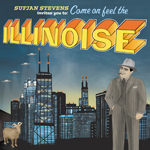
Having been inspired by Sufjan Stevens to "Come On! Feel the Illinoise!", I have been digging (sporadically) into the historical backdrop of the album. Of particular interest is "The World's Columbian Exposition," the Chicago World's Fair of 1893, and conveniently, I found on my very bookshelf a copy of Erik Larson's The Devil in the White City: Murder, Magic, and Madness at the Fair that Changed America. (Thanks for the loaner, Jen. I only wish I had been aware of the loan earlier!) The book is a popular history of this fascinating segment of America's past. Larson does a fine job of giving an accessible and engaging chronicle of the Fair, with great attention to painting a detailed picture of American society at the end of the 19th century. Larson's narrative juxtaposes two very different men, both vitally connected to the fair.

Architect Daniel Burnham was the director of Works for the Fair and was ultimately responsible for its construction. In the latter half of the 19th century, Chicagoans became increasingly desperate to establish their home as a great American city, and the Fair provided the opportunity to do just that. But even moreso, the ante had already been raised by the spectacular 1889 Paris Fair, most famous for the unveiling of the Eiffel Tower. Burnham faced enormous pressure to deliver something the world had never before seen for the 400th anniversary of Columbus' discovery of the Americas, and many (especially in New York, which had lobbied to be the venue of the fair) predicted a colossal failure. Although Burnham's vision of the fair was lofty and majestic, the shortened timetable appear insufficient to turn his dream into a vast array of impressive structures and lush landscaping that would capture the hearts and minds of the world.

Although much of the work was completed by Opening Day in 1893, there was still a good deal left to complete, including George Ferris' giant wheel, an imposing structure intended to "out-Eiffel the Eiffel Tower." The lingering public perception that the fair was largely unfinished, combined with economic troubles across the nation, threatened to make the fair the ruinous disaster predicted by detractors. However, the ethereal allure of "the White City," the nickname for the impressive and classically-architectured buildings surrounding the fair's Court of Honor, combined with a blitz of savvy advertising, ultimately succeeded in bringing visitors to Chicago in record numbers. As Larson notes, the White City was characterized by clean and orderly streets, lit by abundant alternating-current lamps and surrounded by pleasant parks and gardens. Combined with the magnificent buildings, the showcases of new inventions and the entertainment opportunities from around the world, the White City offered a stark contrast to the grime, odor, danger and despair characteristic of American urban areas like "the Black City" of Chicago. The Chicago Fair would leave an impression on city planning in America for years to come.

The book's other focus is on Dr. H. H. Holmes, a sociopath and serial killer who used the Fair as a steady source of victims. Although Larson avoids the grisliest of details, Holmes' story is nonetheless chilling. Handsome and possessing preternatural powers of charm, Holmes began his criminal escapades with forgeries and fraud; however, his interest in faking deaths as part of life insurance swindles quickly turned his energies towards far darker pursuits. Holmes moved to Chicago and acquired a pharmacy, where his charms made him quite successful, particularly with the steady stream of young female customers. Acquiring more property, Holmes set out to build "The Castle," an entire city block's worth of rental spaces, shops and dwellings. Due to the proximity to the upcoming Columbian Exposition, Holmes opened "The World's Fair Hotel." Over the course of three years, Holmes would prey on an unknown number of victims, disposing of them in the soundproof vaults he had secretly constructed below the building. The exact number is unknown, although most estimates place it at a minimum of fifty. (Holmes' own confessions list twenty-seven, although as many as two hundred disappearances were traced in some degree to Holmes and "The Castle.") Ironically, Holmes' penchant for fraud (and "Holmes" was not even his given name) ultimately led to his capture, as investigations by angry creditors began to reveal something much more sinister.

I was struck by many of the similarities between Burnham and Holmes. Both were driven by relentless ambition, albeit to vastly different ends. But even more profound is how both exemplified "the Gilded Age" in which they lived. Holmes, of course, projected a charming persona -- kind, genial and caring. History, of course, would reveal that the doctor's warm facade masked cold, unparalleled cruelty bent on controlling, torturing and killing. Burnham's story also has a twist, although not so much with the architect as with his creation. The White City itself was not meant to be permanent and most of the buildings were little more than "decorated sheds" (to quote detractors) with a plaster/hemp facade instead of actual stone. Many leading designers of the day believed that the classical architecture of the fair severely stunted the growth of American development of the field. Moreover, the sheer splendor of the White City was a marked contrast to the grime, sickness and poverty that visitors to the Fair briefly left at home. This would be especially apparent when the scores of workers drawn to the temporary employment boom caused by the Fair soon found themselves jobless and forced to return to the despair of "the Black City." The Fair itself ended on a somber note, when the epic closing ceremonies were cancelled in favor of funeral proceedings for Chicago's mayor, assassinated three days prior to the closing. Prophetically, many of the Fair's creators and attendees opined that they could not bear the thought of such a magnificent spectacle falling into disuse and ruin after the fair, and Burnham even remarked that seeing it disappear in a blaze of glory would be preferable. In spring of 1894, at which time many of the abandoned Exposition structures were being used for shelter by unemployed workers, many buildings of the Court of Honor were destroyed by fires set during the Pullman Strike. The bright promise of the White City ultimately crumbled into rubble.

All in all, The Devil in the White City is a fascinating book. Although Larson has packed it with detail (and he includes a great number of anecdotes of the Fair experiences of noted Americans, including Buffalo Bill Cody, Jane Addams, and a young Walt Disney, just to name a few), his narrative is captivating and easy-to-read. Recommended reading for anyone interested -- even moderately -- in American history.

Sunday, October 30, 2005

Phew

Georgia Tech Holds Off Clemson For 10-9 Win

A tense and often frustrating four quarters, but it's still a win.

EDIT: I would be remiss if I failed to mention that Georgia lost this weekend (to Florida). How 'bout them Dawgs?

Friday, October 28, 2005

Pre-order the New Eric Peters CD

Eric Peters is now taking pre-orders for his new album, scheduled for release in February 2006. Why pre-order so far in advance, you might ask? Well, for starters, the pre-order cost is a mere $10, quite a deal for such high quality tunes (TUNES!). Secondly, your early investment will help ensure that all the costs are covered to keep the release on-schedule.

Pre-orders available at the EP web store (STORE!).

Thursday, October 27, 2005

Catching up with the Boys

My tenth graders are reading A Separate Peace, and last week I read it for what I think was the second time. (If I have read it before, I didn't remember any of it.)

If you've ever read this famed coming-of-age novel about two friends at a private boys' boarding school during WWII, then you might appreciate this site.

The link above includes quotes from the book interspersed with pictures from Exeter, the prestigious school that Knowles attended and used as the model for Devon. I've had a copy since high school, but I don't think I ever actually finished it back then. We never had to read it for class, and I didn't appreciate it then since it was about boys (ew, gross). I wish I had. It's a beautiful story about friendship and betrayal at a school deeply affected by war, and it shows clearly that the enemy we are all fighting is really only ourselves.

I've also begun reading Chaim Potok's novel The Chosen. Interestingly, it, too, takes place during WWII. Sadly, it's also another high school staple that I never actually finished, but (for some reason) have retained a paperback copy of since my freshman year. I found a turned-down page last night somewhere in the first chapter.

It's sad how much good American fiction I've missed out on because I was so obsessed with Austen and other authors from across the Big Pond. Not that I think either is necessarily superior, but I've always been partial to Brit Lit, and Faulkner and Steinbeck and Cooper never really interested me. Somehow, from high school to undergrad and even up until last year in my graduate English classes, I just "skipped over" much of American lit. It wasn't until a seminar class my senior year at BSC devoted entirely to Hemingway and Fitzgerald that I began to appreciate that Yankees writers have something worthwhile to say. (I know, I know...I'm a sorry excuse for a high school English teacher. At least they didn't ask me to teach 11th Grade!) I'm slowly attempting to remedy my egregious defenciency in American classics. And I'm enjoying it immensely.

Tuesday, October 25, 2005

The Megachurch and the Church on the Corner

The iMonk has a provocative and solid post on the harmful impact that megachurches often have on smaller churches seeking to emulate them.

"That Flushing Sound: Evangelicals Worship Till There’s Nothing Left"

Monday, October 24, 2005

No Comment

Uh oh. It looks like Haloscan is having some issues today.

UPDATE: Well, it looks like I've got comments working again, although the counter isn't updating very fast.

Friday, October 21, 2005

Blog-dor!


It's never too late to jump on the bandwagon. Check out the 8-bit majesty!

Tuesday, October 18, 2005

While on the subject of all things Potter, Travis has launched his new Sword of Gryffindor site. Be sure to check it out.

Voldemort Can't Stop The Rock!

Image hosted by Photobucket.com
How can I even begin describing last night's Harry and the Potters concert? I'm not sure, either, but I have to try.

The concert was definitely the loudest show I've ever seen at Eddie's Attic, which is known primarily as a "listening room" for acoustic guitar-oriented folks like Pierce Pettis, Glen Phillips and Bill Mallonee (the latter two are playing together at the Attic in November -- woo hoo!). However, Harry and the Potters stormed into Decatur in a dark cloud of wizard rock and left a trail of awesomeness in their wake. Team Redd looked a little out-of-place amidst the crowd of teens, pre-teens, pre-pre-teens and pre-schoolers, mainly since we came straight from work and were still dressed in our Muggle clothes. But we managed to rock with the best of them.

From the show-opening dance party stylings of "Voldemort Can't Stop The Rock" to the anthemic closer "The Weapon," Harry (Year Four) and Harry (Year Seven) put on quite an entertaining show. Any lack of vocal talent was more than compensated by their sheer energy and impressive stage presence. And admittedly, it appears that months of live performances have really helped to hone their singing. I can only assume that their drummer failed to receive permission to leave Hogwarts for this tour, since they had to rely on a drum machine -- but I don't think this detracted much from the experience. The crowd was really into the show and sang most enthusiastically, especially on favorites like "Wizard Chess" and "Save Ginny Weasley." They also played a couple of new songs, including a Christmas tune and a love song for Ginny which includes the line "My wizard scar still burns for you." Genius. (Sorry mark, they didn't play "These Days Are Dark.") I guess the only downside about the evening was that, because their songs are so short, the actual concert wasn't very long.

But it did leave an indelible impression on us both, like a scar or magic quill marks on the backs of our hands -- but much more pleasant.

PS Allison wanted to add some photographic documentation of the show. Thankfully, a kind soul sitting behind us sent us her pics. In this picture, Harry (Year Seven) is clambering through the audience and has decided to swipe a beverage from one of our fellow patrons. How brash!

Monday, October 17, 2005

Back in the Saddle

Tech Wrecks Duke 35-10 ...

Sure, Duke is the perennial whipping boy for ACC football, but after back-to-back losses (and a fairly miserable first half against the Blue Devils), it's nice to get another 'W' for the books.

Wednesday, October 12, 2005

Canticle of the Plains

Joel Garver had a good post on St. Francis the other day. About the same time, I heard a track from Canticle of the Plains while shuffling the old iPod. This convergence of events prompted me to dust off (metaphorically, of course, although the cover on my iPod does tend to attract debris) the album and give it a listen.

Canticle of the Plains is a somewhat hard-to-find album released by Rich Mullins back in 1997, the year of his tragic demise. Described as "a musical based on the life of St. Francis of Assisi by the Kid Brothers of St. Frank," the album is the brainchild of Mullins, who co-wrote all the songs with Mitch McVicker and longtime collaborator Beaker. Incidentally, Mullins is barely present on the recording, limited to sparse background vocals only. The songs were written as part of a larger musical, based roughly on the life of St. Francis (transposed to the post-Civil War Western U.S). As such, the songs are sung by different characters, and the album enlists the aid of several vocalists, including McVicker, Michael Tait and Kevin Smith of dc Talk fame, and Leigh Nash of Sixpence None the Richer. Rich was never able to perform the musical in full, although I understand that it was performed posthumously on a few occasions. Either way, the album is fantastic and comprised of some of Rich's best writing.

Tuesday, October 11, 2005

The Musical Baton!

(received from richard - better late than never!)

I always have trouble with these type of "rate your favorite music/book/movie" questions, so these are subject to change at a whim. In fact, I was thinking about them a little too much, so I decided to go ahead and post it.

Amount of music on your computer?
Which one? I don't have any on my work computer, but that's a pretty boring answer. My iTunes folder at home is up to ~15.45 MB (though a lot of that isn't exactly "music," since I listen to a lot of lectures, sermons and the like).

Currently listening to?
Sufjan Stevens, Michigan

Five songs that mean a lot to you?
Uh ... this is tough.

"Big Mistake" - David Wilcox
"Time Stand Still" - Rush
"Close of the Day" - Sandra McCracken
"Gather 'Round, Ye Children, Come" - Andrew Peterson
"Come Thou Fount of Every Blessing"

Top five albums?
Again, I always have a problem with questions like these. How to choose? For some of these, I'll list a favorite band and a great album of theirs. But even then, it's so hard to choose ...

(In no particular order)

Rush, Presto: Easily my favorite rock band. Though I've grown to appreciate all kinds of acoustic, singer/songwriter-driven music over the last several years, I still have a deep-rooted love of heavy guitars and vocal wailing. Plus, Neil Peart (though writing from a decidely humanistic perspective) is one of the most intelligent and insightful songwriters around. It's hard to pick a specific album, since they have three decades of material, with notable evolution over the years. I picked Presto because it has some great songs, like the title track, "Chain Lightning" and the cleverly goofy "Anagram (For Mongo)."

Caedmon's Call, 40 Acres: Definitely one of my biggest musical influences. I didn't listen to a lot of "Christian" music before discovering them in college. (I tried to make myself listen to popular CCM, but I just couldn't handle it.) Caedmon's helped me realize that Christians could make quality music, even if the radio didn't give them much coverage. Again, it's hard to pick a specific album. Their indie stuff, like My Calm//Your Storm, makes up for its lack of production quality with an abundance of raw awesomeness. Their latest, Share the Well, is an amazing and ambitious effort in its own right. But 40 Acres is the high water mark, I think. The album is well-produced and sounds great, with songwriters Aaron Tate and Derek Webb shining on every track. (The only low spot is a cover, and even it is fairly decent.) It was also the last album before the band started going through significant lineup changes.

Andrew Peterson, Love and Thunder: Andy is an excellent songwriter and an all-around great guy. I've seen him in concert more times (far more times) than any other artist or band, mainly because his shows always manage to make me think and to make me laugh a lot -- often within the span of a few breaths! Similar to Richard, I had a tough time choosing between this album and Carried Along, but I think the overall cohesion of L&T as an album gives it an edge.

Rich Mullins, A Liturgy, A Legacy, and a Ragamuffin Band: The two previous artists list Rich as one of their major influences, and rightfully so. This album is simply beautiful, with Mullins' songwriting complemented by a host of talented musicians. What more can be said?

Joe Satriani, Surfing With the Alien: Remember above, when I professed my love of heavy guitars? Satch may not have the heaviest, but he certainly plays his with the best of them. I realize that not everyone appreciates rock guitar instrumentals, but it's their loss. Although Satriani possesses superhuman technical skills, he also has a great ear for creating songs with memorable melodies (instead of just recording a bunch of guitar speed drills). Surfing With the Alien is Satch at the top of his game. Strange beautiful music, indeed.

And that's five already! If I had more space, I'd probably find a way to sneak in Eric Peters (Land of the Living), derek webb (i see things upside down), Van Halen (either the self-titled debut, or 5150 from the Van Hagar era), Randall Goodgame (Arkadelphia) and Spin Doctors (Pocket Full of Kryptonite).

Last album bought?
Sufjan Stevens, Michigan

Recent discoveries?
Harry and the Potters
Sufjan Stevens

Okay, the baton is now being passed on to:
Amy
Chandra
Lane
TRAVIS

Monday, October 10, 2005

Quarantining A Generation

Good article from Boundless about the dangers of age segregation within churches, misguided attempts at "relevance," and the fracturing effect they have on churches.

(Thanks to the BHT.)

word!

A co-worker told me that I made an appearance in a dream she had this weekend. If that wasn't strange enough, it turns out that I showed up at a dream-land club she was visiting. Apparently, I was a rapper, secretly pursuing my dreams of rapstar-dom by night, while my co-workers and friends were oblivious. Naturally, I asked her the most obvious question: was I any good as I rapper? Yes, I was.

Maybe this is a sign for a change in career paths?

Friday, October 07, 2005

I've Got Nothing To Say

Man, I haven't had much to write about lately. I know there's been plenty of stuff going on, but I guess I haven't had much time to assemble coherent thoughts. (I could post something about the awesome Andrew Peterson show we attended last weekend at New City Cafe, but that would be way too obvious.)

Maybe I'll have more to say after the Georgia Tech - N.C. State game tonight. We're going, and there's an 80% chance of rain tonight. If that's not a recipe for fun, I don't know what is!

Nope, nothing to say. At least the rain was limited to a steady mist/drizzle throughout the evening.

Monday, October 03, 2005

Moving right along

Alastair Roberts has retired his excellent blog 40 Bicycles.

But, rising from its ashes comes alastair.adversaria, which promises to be a worthy successor. Be sure to check it out.

Saturday, October 01, 2005

How Rad!

Harry and the Potters will be playing at Eddie's Attic in Decatur, GA on October 17. And in Athens, GA the next night.

Wednesday, September 28, 2005

Bill Gates Goes To College

I had heard about Microsoft recruiting Napoleon Dynamite for a video, but I finally got around to viewing it. The video and audio quality aren't the best, but it's kind of funny. Especially Bill Gates' Pedro hair.

Monday, September 26, 2005

LOST and the Periodic Table

Calling all science geeks and fans of LOST. I have a question.

We re-watched the first few minutes of the LOST season premiere last night and I noticed that the bottle of liquid the guy in the opening montage injected himself with had the numbers 4-8-15-16-23-42 on the label.

Here's my thought-- what if they stand for elements on the Periodic Table? What if the solution is made up of those 6 elements? So, my question to all who are much more knowledgable than me about these things is: what would happen if you put all these elements together? Here they are in order:

4 -- Beryllium
8 -- Oxygen
15 -- Phosphorus
16 -- Sulfur
23 -- Vanadium
42 -- Molybdenum

(Molybdenum was always my favorite element name to say. I used to remember to spell it correctly by thinking of "Moly B. Denum")

I know all LOST theories are far-fetched. I thought I'd just throw mine into the mix. Maybe there is some sort of crazy scientific experiment where they test this formula on people and the remaining 45 survivors are going to be new subjects? Or already have been? We know that these numbers have been circulated since at least as far back as WWII, when those army guys first picked up the signal before they went insane. What would these elements create? What would it do to someone if there were large amounts in your bloodstream?

I don't read the messageboards or anything so I haven't seen this idea or theory before, but if it has already been shot down please let me know. Or feel free to shoot it down yourself. It's all in good fun, anyway. I'm not obsessed, I tell you! ;)

"Snow Days" in September?

Well, if your Governor calls for statewide "precautionary" school closings due to rising gas prices after Katrina and the threat of even more damage to the Gulf refineries from Rita...then you might be in my shoes.

I admit, when our principal came over the intercom with the announcement at 4 p.m. on Friday I thought it might be a joke. I attempted to calm down the six screaming freshman girls who were in my room until two fellow teachers arrived in my door jumping up and down like overly-excited Labrador puppies. Then I gave up and gave in. Woo-hoo! Two days off!

If you didn't realize the inefficiency of large, government-run education, this should be your wake-up call. Of course, most or all of the private schools in Metro Atlanta are closed today and tomorrow as well. I bet the homeschoolers have to be just a bit envious. ;)

So that leaves me here at home today. Though it throws my lesson planning schedule off a bit, I'm excited about my "snow days." I plan to use my time (wisely--I hope) to tackle the mounds of grading that has piled up-- mainly essays and projects turned in within the last week or so. I also get to do some much-needed housecleaning-- and I'm looking forward to it!

Friday, September 23, 2005

What Is The Church?

Peter Leithart's brief observations on "What Is The Church?" have resonated with some thoughts I've had lately. Instead of viewing biblical descriptions of the church as metaphors that serve as "raw material for theological reflection," Leithart states that these descriptions are actually the fundamental descriptions of the church. This seems to tie directly into Leithart's view of the church as "an alternate polis," but I'll probably have to mull this over some more.

Thursday, September 22, 2005

Tech Talk

Team Redd has deep roots at Auburn University, with innumerable family members (including both sets of parents) being alumni of that fine institution. This has proven interesting in recent years, when Auburn has played football against Georgia Tech, my alma mater. Obviously, my loyalties have remained true to my own school (and my pettier side has enjoyed gloating over Tech's 2-0 record against the Tigers since their long-standing football rivalry was rekindled in 2003, after a 15-year hiatus).

That being said, this news is pretty delightful.

Tech Adds [University of] Alabama to Future Schedules

(If you don't understand why that's delightful, you probably aren't familiar with the rivalry-laden world of SEC football.)

In more pressing news, Tech QB Reggie Ball, recently hospitalized for a few days due to viral menengitis, is still questionable for this weekend's big game against No.4 Virginia Tech. Should be interesting.

Wednesday, September 21, 2005

I-L-L-I-N-O-I-S


I've been hearing lots of good things about Sufjan Stevens for a few months now, but initially, I just didn't get into his music. I think I even rated him as "Never Play Again" on my Launchcast station. Thank goodness for second chances for foolish me!

Even though I had previously listened to a few of his songs, nothing really grabbed me. A few weeks ago, I overheard one of his albums playing in the background at a pub (a personal favorite, The Brick Store in Decatur, GA). During another visit to the same pub, I noticed a stack of music/arts newspapers, one which featured Mr. Stevens on the cover. This, combined with more favorable comments from music-lovers, drove me to give Sufjan another try. I downloaded several free tracks, and I moderately enjoyed them at the time. But, the songs really stick with you. I found myself unable to rid my brain of "The Man of Metropolis Steals Our Hearts" and "Casimir Pulaski Day." At this point, resistance was futile, so I made a trip to Borders.

I decided to start with Illinois, which features the two songs mentioned above. This album is the second in Sufjan Stevens' ambitious plan to write an ALBUM dedicated to each of the 50 States (he started with Michigan). I'm not exactly sure how to describe Steven's sound. He is certainly competent enough to carry a song with just a guitar and his haunting tenor, and maybe a banjo here and there. However, much of his music is considerably more ambitious, featuring piano, horns (of the high-school band variety), strings and a chorus of vocals. Illinois is definitely an album for the active listener, as Sufjan offers a variegated collection of songs inspired by the Prairie State, stringing together a UFO sighting, a serial killer, Carl Sandburg, the Windy City and the Columbian Exposition of 1893, just to name a few. But Illinois is more than just a collection of songs; rather, it is a true album, meant to be appreciated as such, with Sufjan weaving the tracks together with repeated musical and lyrical motifs, as well as instrumental interludes featuring some of the most audacious titles imaginable (e.g, "Riffs And Variations On A Single Note For Jelly Roll, Earl Hines, Louis Armstrong, Baby Dodds, And The King Of Swing, To Name A Few"). Although it takes a few complete listenings to really "get it", the album certainly sticks with you in a good way.

Highly recommended.

Monday, September 19, 2005

The iMonk is worred about the new Narnia film

And perhaps not without reason.

Theology On Fire

Covenant Seminary has a stockpile of great resources, including a ton of mp3s. I have recently enjoyed listening to the set of recordings from the 2005 Sacrifice of Praise Worship Conference, held at the seminary at the beginning of the year. Each of the posted sessions was very good, covering a variety of topics related to worship and the planning worship services.

"Worship as Gospel Re-Presentation," Bryan Chapell's general session talk, was especially good. Chapell begins by tracing the development of Protestant liturgy, from Luther to Calvin to the Puritans and beyond. Although he notes many of the differences between each, his stated goal is to examine their commonalities. The thrust of his session is that a worship service should be structured as a re-presentation of the Gospel. Many different components can be used, but the overall contour of the service is a corporate-level retelling of the work of the Gospel in an individual's life. Chapell uses Isaiah 6 to flesh out this pattern: the prophet comes before God and apprehends His absolute holiness. This sight immediately overwhelms Isaiah with a sense of his own sinfulness. God then makes provision for Isaiah's cleansing, which results in instruction and equipping for service. Similarly, Chapell argues, our worship services should flow from a proclamation of God's greatness into recognition of our own sin, then into assurance over our pardon which comes through the cross of Christ, and finally into instruction in holy living, both as individuals and as a corporate body. From his survey of liturgical forms, Chapell notes that a wide variety of components can be used while still maintaining this basic Gospel contour.

Kevin Twit's talk on "Theology on Fire: The Transformational Power of Hymns" is exceptionally good, as is Reggie Kidd's discussion of "Bach, Bubba, and the Blues Brothers: The Singing Savior's Many Voices." And, as I mentioned, the other sessions provide a great deal of valuable and insightful reflection on corporate worship. The entire set of conference recordings is a great resource to anyone involved in leading and planning worship services, as well as anyone seeking to more clearly define a theology of corporate worship.

(One minor complaint about the site: navigating through the resource library could be a little easier. To find the Sacrifice of Praise conference recordings, you can go first to the topic index page and then to the "View all titles" option. The Sacrifice of Praise Worship Renewal Conference recordings are towards the bottom of the list. Or just use "sacrifice" as a term for the "by title" search function.)

Sunday, September 18, 2005

Jackets Remain Unbeaten

Georgia Tech defeats Connecticut, 28-13.

With QB Reggie Ball in the hospital, Tech had to rely on freshman Taylor Bennett, who turned in a decent performance in his first collegiate football game. Interestingly enough, his very first play in a college game was a touchdown pass. Although the rest of his game was not nearly as stellar, he still did okay. Hopefully, Ball will be back in action for next week's game against Virginia Tech.

Wednesday, September 14, 2005

The Far Country and the Not-So-Far Concert

It should come as no surprise to regular (or even semi-frequent) readers of this blog that Team Redd highly endorses The Far Country, the latest CD from Andrew Peterson. Andrew is one of our favorite musicians, so it took all of 5 seconds to decide whether we should make the 1.5 hour drive down to Macon, GA to see Andrew play this past Sunday night. Although we had originally planned to see the show with a couple of friends, by Sunday we ended up leaving Atlanta with a mighty contingent of 13 souls (plus the original two rendezvousing with us in Macon) intent on hearing quality acoustic music.

The concert, as expected, was fantastic. In addition to usual musical compadre Ben Shive, Andrew brought along a bass player (who had apparently played with Counting Crows at some point) and a drummer (who had played on the new album) to play with him. Afterwards, both Andy and Ben separately confessed their concerns about how fans would react to the addition of bass and drums, but personally, I thought it really filled out the songs in a good way. I did have one minor gripe about the rhythm section obscuring Andy's vocals on some of the more up-tempo songs, but that was more an issue with the venue's sound system than with the band. But, sonic muddiness aside, the concert was quite excellent. Andy, as is his custom, interspersed the set list with stories about the songs, about his family, and ultimately, about the Gospel. He played a good mix of songs from most of his albums, as well as (by request) his ode to Mexican food. I was especially pleased to hear him perform an upbeat version of "Isn't It Love," of which he had been playing a much slower version in recent years. Not that the slow version is bad, but the poppy, up-tempo rendition sounded great with a band. I also think this is the first Andrew concert (out of the many, many, many I have attended) where he didn't play "Nothing To Say," his big radio single. Which is fine by me. It's a great song, but I like hearing other stuff, too!

Allison and I are really enjoying The Far Country, and Andy played several selections from it. Some fans have seen this album as a marked departure from previous albums, but I'm not so sure that's the case. Yeah, there are distorted electric guitars in places and more drums than in the past, but the songwriting is still just as solid. Andrew has never been afraid to use a variety of instrumentation, so I just consider these additions as more choices on his musical palette.

My only lingering quibble about The Far Country is not actually about the album, but about some tangential discussions stemming from it. The title comes from a quote which tells us that "God is at home. We are in a far country." The title track alludes to Hebrews, especially in comparing our Christian status as pilgrims in this world to Abraham's sojourn to an unknown land of promise. At the outset, I must make it clear that I don't find anything objectionable in Andrew's longings for heaven, either in this song or others. However, it seems like Christian discussions of death and heaven (like those sparked by the album) usually veer into sub-Christian views on the subject. These discussions are correct to focus on sin and death as deviations from God's ultimate design, and the appropriate human response should be a deep longing for a holy God to make things right. However, the sub-Christian view usually sees the "solution" as God removing the Christian from the world of pain and suffering into eternal heavenly bliss. Death is an escape from a fallen world. I believe that the Bible does not present this solution.

Instead, the Christian hope is that God will act to make all things right: sin and death will ultimately be defeated. Although the Bible speaks of an intermediate state where believers go to be with Christ after death, it speaks far more loudly of a final state of new creation, where God completely redeems His universe. Our resurrection to dwell in a new heaven and a new earth is the content of our ultimate hope that God will finally triumph over sin and death. This fact should be our consolation as we achingly make our way through this fallen world. Because God will redeem and restore the current creation, "heaven" is not a location completely removed from our current experience. Rather, the new heaven and earth are the final state of God's plan of redemption, to be consummated at the return of Jesus. I've found that it is far more useful to think of the distance between "the far country" and our ultimate home with God, between the current and final states of things, in terms of time and not of space.

And thankfully, Andrew's latest album does a great job of capturing that honest longing for God to make right all that is currently wrong with the world.

Tuesday, September 13, 2005

Monday, September 12, 2005

J.R.R. Tolkien: A Biography


Humphrey Carpenter's J.R.R. Tolkien: A Biography is a great look at the life of the creator of Middle-Earth. I had previously read Carpenter's group biography of The Inklings, so I was looking forward to getting a better glimpse at Tolkien. I was not disappointed.

In the preface, Carpenter notes with irony that Tolkien would have frowned upon a biography of himself, as the Professor believed that an author's life is best examined not through historical data but through his work. Granted, the Tolkien family made a tremendous amount of personal papers and correspondence, as well as numerous interviews, available to the biographer to chronicle J.R.R. Tolkien's history. However, as Carpenter frequently notes (perhaps too often), the fantastic and imaginative worlds that Tolkien created stand in stark contrast to the relatively uneventful and routine life that he lived.

Not that the details of Tolkien's life are inconsequential, though. His early years appear to have had a tremendous influence in shaping the course of his entire life. Losing his father at an early age, John Ronald (as he was called) was raised largely by his mother, Mabel, and sadly, she died within ten years of her husband. Carpenter notes that Tolkien's strong attachment to his mother profoundly influenced his entire life. Her family origins in the West Midlands of England sparked her son's lifelong interest in the history and ancient language of the region. Mabel's conversion to Roman Catholicism resulted in Tolkien remaining a devout Catholic until his death. Finally, his mother's tutoring influenced John Ronald to excel at language studies, even delighting in creating his own languages and alphabets. Other facets of Tolkien's life are fairly interesting, as well: his teenage romance (prohibited by his guardian) with the girl whom he would later wed; his less-than-exceptional scholastic performance, despite his bright mind and immense talent; and his WWI experiences, which included the Battle of the Somme and a lengthy recovery from trench fever. After the war, he served in various academic roles, ending up as a professor at Oxford.

Carpenter notes that Tolkien's decades at Oxford would hardly be considered exciting by most people, especially those enthralled by his tales of elves, magic rings and forgotten civilizations. He was an exceptionally gifted philologist and a talented lecturer, although his life was not notably different from an average Oxford don. He rarely travelled, eschewed automobiles and newspapers (and later television), and preferred ancient literature to more "modern" works, such as Shakespeare. However, Tolkien lived a fulfilled life. He loved the subjects he taught and researched, and enjoyed spending time in the company of friends. At Oxford, Tolkien belonged to "The Inklings," a group of friends and colleagues who shared a common love of literature, and which was primarily comprised of conservative academics from the university. The most significant among the group were Tolkien and C.S. Lewis, who would remain close friends for years to come.

Carpenter does a great job of exploring the link between Tolkien's devout Catholicism and his creative endeavors. Of prime importance is Tolkien's idea of "sub-creation" -- that is, man's having been created in God's image manifests itself in man's own desire to create. In Tolkien's case, his love of ancient language led him to create his own languages. However, mere languages were not enough, because languages come from societies having their own unique culture and history. Therefore, Tolkien began creating his own world by tapping into his deep-rooted interest in his West Midland origins and his love for ancient tongues. As Carpenter shows, Tolkien viewed this creative impulse, in himself and in others, as a result of God's own act of creation. His frequent discussions of this subject with Jack Lewis had a direct impact on the latter converting to Christianity (to Anglicanism instead of Catholicism, much to Tolkien's dismay!).

The book also gives a fair amount of attention to the saga of Tolkien's writing and publishing of The Lord of the Rings. I was especially interested to see how little of his work Tolkien actually finished. It is true that he spent decades creating Middle-Earth and then telling the stories set within it, but his perfectionist tendencies often prevented him from actually completing the many ambitious projects he had undertaken. For example, on more than one occasion, Tolkien's publisher returned a manuscript to him for final proofing before it hit the presses, only to have him begin massive rewrites of portions (or the entirety!) of the work. Although Tolkien fans are understandably disappointed that he never finished The Silmarillion or many of the Lost Tales (which were later edited and released by his son Christopher), after reading his biography, I'm impressed that he even finished The Lord of the Rings.

Overall, Carpenter treats Tolkien very even-handedly, portraying his faults alongside his finer qualities. Anyone who enjoys Tolkien's work will appreciate this look at his life.

Friday, September 09, 2005

Tell me the story...

Les Newsom over at CommonGrounds has posted a beautiful retelling of the history of our world from the Christian perspective called Katrina and the Kingdom. A must-read.

It also echoes many of the insights about creation and recreation I discussed in this post last month.

Though Katrina's wrath continues to be a great tradedy, we do not grieve as they who have no hope. God's plan is to recast this sin-soaked world with an ultimate comedic end -- the renewal of all things. In this effort of picking up pieces and restoring the ruins, may we remember that as Christians we are called to be part of the restoration efforts now, helping others not only to rebuild their lives but their homes and their cities as well. It will take a great many people in the months and years ahead to reclaim the Gulf Coast, and it can only be done in the light of Christ's work on the cross. As Les so eloquently noted:
I have realized that only the Christian story ennobles and prepares and mobilizes into action the necessary amount of spiritual and social resources to preserve life in these situations. ... May God help us as his Kingdom strides forward to reclaim yet another chapter of human history marred by the destructive effects of sin.

Allison's Picks

The homepage at the computer in the faculty lounge is msn.com, which I don't usually visit, except, of course, when I'm kicked out of my classroom during 7th Pd because another teacher is in there. Today I noticed a link to the best "cheap eats" and thought I'd check it out.

Surprisingly, Atlanta's list had quite a few of our favorite after-church fellowship spots, including:

Eat's
Fellini's Pizza

Moe's

I've only eaten at Taqueria del Sol once, but it's incredible. Now that they've opened one in Midtown I'm trying to encourage everyone to go there. Sad that they're not open on Sundays.

Gaines has eaten at Fat Matt's with the guys, so I've heard on good authority that the ribs are de-lish.

Waffle House is a staple late-night eatery, of course, created by none other than a couple of Georgia Tech grads.

The Varsity is a Hot-lanta landmark, but I just can't make myself eat there more than once every few years. It's like instant artery-clogging grease-infused burgers and dogs.

Other favorites that weren't included on their list:
LaFonda Latina
El Torrero

Mellow Mushroom

Also, instead of Doc Fey's Noodle House, which I'm sure is good but I've never tried, we prefer Mama Fu's, which is owned by the same folks as Moe's. Instead of the usual Moe's greeting, however, we find it quite humorous that they shout "Welcome to Mama!" whenever you walk in the door. I always think I must be in some surreal Italian restaurant.

Speaking of Mama Fu's-- one Monday night, a group of us girls decided to meet there. Usually it is like a fast-food restaurant where you order at the counter and the only convenience is that they bring your order to your table. Well, this particular evening must've been the test run of their attempt at a high class establishment. When we entered, there were no less than 13 hostessess and servers standing like British guards waiting for us. They actually asked us to be seated, set out cloth napkins, gave us real menus and took our order at the table. Admittedly, we were a little weirded out at first, especially since they brought us drinks from the foutain machines that were less than three feet away from our table. The best, though, was when my friend ordered hot tea (they only had green) and then she asked for creamer. They didn't have any, so they actually went to the CVS next door and bought some for her! Talk about service! They certainly got a nice tip and a good review that evening.

Wednesday, September 07, 2005

Revenge of the Birds

A few months back, I noted that our porch birdfeeder had been overrun by crows, who scare away the cute birds. Fortunately, we haven't had too much trouble with them over the last few months. Unfortunately, their absence is directly correlated with our slack-ness in keeping the feeder refilled. The weekend before last, in a fit of productivity, we restocked the feeder and anxiously waited for the cute birds to return. Several days passed with no sign of our winged friends, but finally, they began returning for free food.

Unfortunately, the crows have also returned, in larger numbers than before. There is something quite unsettling about looking out the window to see a half dozen nasty crows perched on my porch. Yesterday, they took things a little too far. Peering out the window, I noticed that one of our potted plants had been rudely knocked from its place on the ledge (right near the bird feeder) and shattered on the concrete floor beneath it. I think you can guess who the prime suspects are.

Allison wants to construct some kind of scarecrow to get rid of them. I am considering a more dramatic option. Let's just say they don't call them a "murder" of crows for nothing.

Sunday, September 04, 2005

Dagrons

Last night as we were out eating dinner before the GT game, I noticed something odd about the little girl at the table next to us. Bright fuschia wings protruded from her back. However, they were not your ordinary run-of-the-mill butterfly wings or angel wings, or even fairy wings. They were dragon wings. Bat-like, plush, sparkling hot pink appendages representing all that is fantastical and fun. Her parents should be proud.

After taking in her father's Star Wars t-shirt and the bag on her stroller advertising Sky Captain and the World of Tomorrow, I figured they had just returned from a day at DragonCon, the annual (non-bi-monthly) science fiction convention in Atlanta. I'm afraid of it. But I did hear that Homestarrunner.com set up a table there this year. That's cool.

Speaking of dragons, last Sunday night on our way to church, we stopped at a red light on Buford Hwy (notorious for making out-of-town visitors believe they've magically arrived in a foreign country in the middle of Atlanta due to the lack of English-language billboards and store signs) behind a bright red pickup truck. The owner of said vehicle had a lovely landscape painted on his tailgate. There were the usual mountains and southwestern-esque feel, but this automotive art had an added touch. With a certain valiant flair, some talented spraypaint connoisseur depicted the very same red truck at the base of a large scary castle being attacked by a large, black, scaly fire-breathing dragon. He was certainly proud of his truck; though, from our vantage point it was hard to tell who was the victor. There was no sign of the dragon anywhere, so I'll leave it up to you, faithful reader, to decide who won that battle.

w00t!

Yellow Jackets Down Auburn

23-14.

At Auburn.

But, there was one even-cooler part of the game. Tech linebacker Eric Henderson is a New Orleans native, and before the game, ESPN announced that he had not yet heard how his family fared in the aftermath of Katrina. The announcers gave out a hotline number on the air to try and get any word on the family's condition. At halftime, they announced that Henderson's family had survived the storm and was well. Great news!

Friday, September 02, 2005

Amy mentioned this in the comments below, but here's a little more info on a small bit of hope creeping up from the horrors plaguing the Gulf Coast.

Tulane Students Safe and Sound

May God continue to multiply these seemingly small acts of compassion.

Wednesday, August 31, 2005

Katrina

Not much to say about the aftermath of Katrina. Words seem so useless at times like these. Please consider donating to some of the many organizations mobilizing relief efforts.

For those in the Southeast U.S., there are plenty of opportunities to offer direct help to victims of the devastation. For instance, in Atlanta the Red Cross has already opened up two shelters for Gulf Coast refugees who fled the storm with little more than the clothes on their backs and are now stranded indefinitely.

These Hurricane Photos should underscore the gravity of the situation and the tremendous need for aid.

God have mercy.

Tuesday, August 30, 2005

Plan 9

Related to yesterday's look at Tim Challies' post on pragmatism, the iMonk has a humorous (yet pointed) take on some of the same issues. Clive Staples himself probably would have enjoyed "Plan 9 From Lower Space."

Monday, August 29, 2005

What Works vs. What's Right

Challies.com has a great post today entitled, "Challenges to the Church - Pragmatism." As the title implies, the post is part of an ongoing series on the different challenges faced by 21st Century Christians. Personally, I think pragmatism -- the view that consequences are the most vital criteria for evaluating whether an action is "good" or "bad" -- is one of the greatest issues facing Western Christians today. While the other two challenges about which Challies has posted (relativism and open theism) are certainly troublesome, they do not appear to be as prevalent in churches that still affirm the authority of the Scriptures. However, pragmatism rears its ugly ahead even within churches that proclaim the supremacy and infallibility of God's Word. Says Challies:
Pragmatism and Sola Scriptura must stand in opposition as each claims to be the key to determining truth. As Christians we need to decide if we are going to depend upon Scripture as the absolute standard of truth or if we will determine truth by consequences. Though we would be hard pressed to find a Christian who says "I believe in pragmatism," the philosophy manifests itself in the Christian world in many different ways. Though people affirm Sola Scriptura with their mouths (or doctrinal statements) they often deny it with their actions.
Challies gives a case study of two hypothetical churches faced with the option of violating their own Scripturally-informed convictions in order to pursue an action that will grow the church and outreach to the lost. The first church opts for a short-time suspension of conviction in favor of growth, while the second decides to stand firm even if it means foregoing potential growth (at least, in this instance). Which church is right?

Challies correctly notes that this is another examples of pragmatism versus sola Scriptura. Many would favorably view the "step of faith" taken by the first church as being vindicated by the results. However, the second church is actually the faithful one, because they have remained obedient to God's commands. By ignoring Scriptural conviction, the first church has sinned. As Challies states, "Results simply cannot excuse disobedience. God may choose to use our disobedience to further his purposes, but this does not give us license to ignore the clear teaching of the Word."

One of the most clear examples of God using man's disobedience for His greater purposes is in the death of Jesus, whose sacrifice ultimately redeems His people from their sins. However, Acts makes it clear that the men who conspired to murder Jesus were not excused from their disobedience, despite the greater good that came out of it. God may choose to use the disobedience of His people to further the expansion of His kingdom; however, He also chastises His people for their failure to obey His commands. My fear is that the pragmatic practice of 21st century Christians is resulting in the storing-up of a great measure of chastisement that will inevitably fall upon us (and already is).

(P.S. Derek Webb's "ballad in plain red" came to mind as I was reading the Challies post.)

School Days

I have survived my first two weeks teaching high school. They say I should take it one day at a time, but it's usually more like "what will I do in the next ten minutes?" Admittedly, I've put a lot of pressure on myself at the beginning, and I'm learning from my mistakes. The mound of papers I already have to grade is a tell-tale sign that I should've spaced out my assignnemts more than a few days. I have 160 students. But that's why I love teaching, I suppose. I'm learning right along with the kids.

I think my biggest sigh of relief is that we successfully pulled off our final events for Apartment Life over the weekend. Saturday was action-packed, since I cooked for a community breakfast that morning, then we helped out some friends with THEIR Apartment Life cookout, and then that evening, we hosted a "Dive-In Movie Night" (as opposed to a drive-in) where we got a company to set up a HUGE screen by the main swimming pool and we watched The Incredibles from lounge chairs (the children were really the only ones watching from the water). Over 60 folks came out to enjoy the show, and the company brought out a dinosaur of a popcorn popper, which apparently came from a real theater. Pixar, M&M's and popcorn. Good times.

In other news, I finally finished re-reading Harry Potter and the Goblet of Fire, which has been languishing on my bedside table for weeks. There are definitely some strong clues about events and revelations that appear in Book 6, but I'll have to save those insights for later. Mostly, I wanted to let everyone know I'm alive, enjoying my job, and am very grateful that we are taking a sabbatical from our Apartment Life duties for a while.

Friday, August 26, 2005

Go Ahead and Hoist a Celebratory Butterbeer

Travis has opened up a new section on his site for ongoing discussions of Harry Potter. Particularly, he (and guest bloggers) will be interacting with and contributing to many of the ongoing discussions about the role of Christian thought in J.K. Rowling's work. It should be great.

So please be sure to check out Sword of Gryffindor!

Green with evil?


As I was leaving for work this morning, I noticed a cool-looking mantis hanging out on the hood of my car. He was just chillin', so after admiring his coolness for awhile, I started my morning commute. Zorak seemed a little confused, but he merely shifted his position on the hood and stuck with me for about ten minutes. Unfortunately, a few miles of southbound travel on I-85 was enough to dislodge him. Although this did resolve my ethical struggle about whether I was qualified for the carpool lane, I was sad to see him go. Perhaps this was a stepping stone to a new and exciting life inside the perimeter (for those unfamiliar with the area, I-285 circles the city in a big loop, outside of which Team Redd dwells).

(I didn't have a camera, but he looked pretty much like this, although Zorak was a lighter shade of green.)

Thursday, August 25, 2005

I Asked The Lord That I Might Grow

I don't know much about Infuze Magazine, a web publication on "art, entertainment & faith," but Randall Goodgame has been asked to be a staff writer. His first entry, "My co-write with John Newton," is pretty cool. After applauding the trend of reinvigorating old, obscure hymn texts for worship, Randall describes his own attempts to update a little-known John Newton hymn called "I Asked The Lord That I Might Grow." Really good stuff.

Perhaps if enough people pester him, he'll post a rough demo of the music.

Tuesday, August 23, 2005

For All God's Worth

I recently finished reading For All God's Worth, a great little book by N.T. Wright. Subtitled True Worship and the Calling of the Church, the book is a series of reflections on Christian worship and mission stemming from Wright's tenure as Dean of Lichfield Cathedral in England. Cathedrals, as Wright notes in the introduction, have an interesting purpose within the Church of England: on the one hand, they are to be centers of authentic Christian worship; on the other hand, they are intended not to be self-contained retreats but rather to be beacons that reflect the light of the Gospel into their surrounding communities. Along these lines, the book divides into two major sections: the first half addresses what exactly is meant (or should be meant) by Christian "worship," while the second deals with the way in which true worship inevitably results in mission to the world outside the church. Unlike some of Wright's denser, more theologically-driven works, this book is a series of brief yet insightful reflections.

Part One, "The God Who Is Worthy of Praise," looks at what worship truly is, especially as it seeks to proclaim who God really is. Wright notes the ease with which people fashion the god that they want, reflecting their own desires in creating something to worship. Ironically, these self-created gods rarely inspire praise. On the other hand, the Trinitarian God of the Scriptures is a direct affront to any desire to create our own deity: the Trinity is too unpredictable, too dangerous, too unfathomable.
The Trinity is not something that a clever theologian comes up with as a result of hours spent in the theological laboratory, after which he or she can return to announce that they've got God worked out now, the analysis is complete, and here is God neatly laid out on a slab. The only time they laid God on a slab he rose again three days afterwards.
Yet "God on a slab" is precisely where our knowledge of God must focus. As Wright notes, it is in Jesus that we see the face of God's love for the world. It is through the cross of Jesus that we must understand God. Our worship should not focus on our efforts to "do something" for God (though a God worthy of worship should certainly inspire action), but on what God has already done through the death and resurrection of Jesus. This central act displays God's love, God's power, and all the other attributes which we cannot help but celebrate. Worship, for Wright, is the Church's single most important purpose, because the constant posture of declaring God's greatness back to Him trains our hearts and minds to proclaim that same goodness out into the world.

Part Two, "Reflecting God's Image in the World," deals with issues stemming from the Christian mission to the world, such as how the Church's proclamation of the Gospel confronts the surrounding world. A clear understanding of grace brings Christians into service as forgiven sinners, realizing their need for the Spirit's empowerment to complete their vocation in the world, and Jesus's call to repentance to Israel serves as the model for the Church's own mission. Wright notes that, as a model, there is not a one-to-one correspondence, because Jesus was primarily calling Jews back into adherence to Torah, which they largely were failing to keep (despite their scrupulous outward appearances). But, as Wright asks, how exactly does this translate for the majority of Christians, whose evangelism and mission are geared primarily towards Gentiles? The answer is that the Fall has left a broken world plagued by pain and suffering, as well as the perception that life should have more meaning that it seems to have. The root of this emptiness is universal sinfulness resulting from man's refusal to worship the Creator (a la Romans 1). Wright argues that the Church's mission should confront this sad state of affairs with the fact that Jesus' death and resurrection have created a new humanity in Christ, and that God uses the Church in His ongoing project of new creation (to be consummated at Christ's return).

The book is not without some controversy. One chapter focuses on ecumenical efforts within the Church, and Wright expounds on his understanding of "justification" language as public vindication that one is within the covenant community. As such, it is the basis upon which all Christians can come together, especially in table fellowship (particularly at the Lord's Supper). Regardless of whether Wright's understanding of "justification" language is correct, I think he makes some great points on unity within the Body of Christ. We often get the cart backwards when we attempt to make doctrinal agreement a prerequisite for sharing the Lord's Table. Rather, the very act of sharing the Supper together creates the setting within which doctrinal disagreements can be discussed and -- God willing -- resolved. Admittedly, I would think there would need to be some boundaries, but Wright's thoughts on the subject are a welcome correction to schismatic tendencies.

Overall, this is a great little book. For those unfamiliar with Wright, it is probably a good introduction, as it is simultaneously easy to read while remaining thought-provoking. It also demonstrates Wright's method of establishing the historical and cultural contexts within which the Scriptures were written, while still paying careful attention to the actual text. Christians don't always achieve this balance, and in this regard, Wright is definitely worthy of emulation.

Monday, August 22, 2005

More Half-Blooded-ness

John Granger over at Hogwarts Professor has uploaded some new articles. I especially liked "Why Half-Blood Prince is the Best Harry Potter Novel." It's a bit long, but that's because Granger packs it with a ton of good stuff, ranging from Rowling's use of "the rules" for detective stories to her skillful use of narrative misdirection to keep readers on their toes. Granger also has some intriguing thoughts on what HBP reveals concerning which characters are actually good, which ones are really bad, and what exactly the Dark Lord is up to during Book 6. Some of his speculations may be a bit fanciful, but he does make some persuasive arguments.

There are several other new articles, including "Baptism Into a Sacrificial Death: The Christian Keys to Half-Blood Prince," which is also a pretty good read.

As always, the usual spoiler warnings apply: if, for some reason, you haven't yet read Half-Blood Prince, please spend time reading it before reading the articles.

Friday, August 19, 2005

Veritas Forum

N.T. Wright audio available on mp3 (1996 lectures at Yale):

The Jesus of Myth and History

So What?

(Props to the N.T. Wright Page for the links.)

This site, run by the Veritas Forum (which seeks to foster discussions on Christianity and related issues on university campuses), has a good selection of free audio from other cool folks, too, such as Os Guinness and Ravi Zacharias, just to name a couple.

Thursday, August 18, 2005

Basket Case

I often use Yahoo's Launchcast to listen to streaming music at work. Usually it's pretty cool, even though I use the free -- and advertisement-laden -- version.

Unfortunately, it appears that Green Day will be here in Atlanta in concert next week. Why is this unfortunate? Because after every 2-3 songs, I get treated to the beginning of "American Idiot" and the same minute-long commercial for the concert. It has the potential to drive one insane from the repetition. I don't know, but I think I'm cracking up.

But, I guess I get what I pay for.

Good Times

Sorry for the blog-famine this week. Allison has been busy with her first week of teaching high school English (which she is thoroughly enjoying). I've got a handful of posts struggling to break out of the Draft folder, including a Wright mini-review. But nothing seems to get finished. All in good time, though.

In the meanwhile, I would be remiss if I failed to mention Star Wars - Clone Wars, Volume 1, a series of shorts created by Cartoon Network. It fills in some of the gaps between Episodes II and III, and it is quite enjoyable. So enjoyable that it could quite possibly be interfering with productive things like reading and writing about what has been read. At least it's not that long. Of course, Volume 2 is in the works ...

Monday, August 15, 2005

Charge!!

Over the weekend, I picked up Charge!!, the latest album by The Aquabats. Before I comment on the album, I guess I should describe the band for the uninitiated out there. How can one even begin to describe The Aquabats?


For starters, they wear costumes and perform as a band of superheroes bent on defending the world from evil-doers of all sorts. And of course, the songwriting tends to follow along those lines, talking about themselves or the many challenges they face, such as two-headed cats, snakes or the Floating Eye of Death. Even when they aren't singing about superheroics, they tend to be incredibly goofy, whether singing about the mundane (as in the nostalgic "Pizza Day") or the exquisite (such as the epic "Captain Hampton and the Midget Pirates!"). Sounds pretty silly, doesn't it?

Well, yeah, it is. But it's a lot of fun. They have a knack for composing really catchy melodies and hooks. The musicianship is actually quite good. The band has seen a metamorphosis over the years, starting off as a ska-ish sounding band and gradually melding into more of a rock sound, albeit with plenty of hooks and riff-age. I am no fan of ska, but the band's goofiness was enough to catch my attention, and my continued appreciation has been stoked by the steady transition into rock-dom. Plus, they manage to sneak plenty of Gen X pop culture into their songs, whether a musical homage to The Goonies or a well-placed riff from Rush's "Tom Sawyer." It's quite clever. (Although, admittedly, there's such a fine line between stupid and clever.) There's also a certain Napoleon Dynamite-esque feel at times, in that prevailing standards of "cool" (in their many different incarnations) are skewered.

So what about Charge!!? It is very different from their previous albums. Although they have returned to their previous practice of ending song titles with exclamation marks (e.g., "Meltdown!" and "Mechanical Ape!"), their sound has continued to evolve. The most noticeable change is the lack of horns, presumably brought about by the departure of the band's horn players. Filling the void are some trippy-but-not-overwhelming synthesizer parts, which were subtly present in previous offerings from the band. The guitar takes the center-stage, and it is in the doubly-able hands of Chainsaw Karate (see the hook-tastic riffs on "Plastic Lips!"). This album was released on Nitro Records, the label founded by Dexter Holland of The Offspring, and Holland's influence can be felt on some of the background vocal singing/screaming. The lyrics are ... well, pretty much what you'd expect from the Aquabats, with songs like "Nerd Alert!" and "Look at Me (I'm a Winner)!" -- the latter of which has an amazingly-catchy arena rock-inspired chorus. Need I say more?

Anyway, sometimes I like to expand my horizons with artistic, thoughtful music. Other times, I just like stupid stuff that is fun to listen to. I'll leave it to the reader to categorize The Aquabats.

(Oh, be sure to check out the video for "Fashion Zombies!" from the new album, with multiple streaming options. One description I saw was "'Beat It' meets 'Thriller' meets 'Night of the Living Dead'" -- yeah, that's about right.)

Friday, August 12, 2005

Why Should the Fire Die?

Nickel Creek's third release, Why Should the Fire Die?, is quite an impressive album. As with all of their previous releases (including solo albums and collaborations with other artists), this album showcases the immense instrumental talents possessed by the trio, each of whom displayed prodigious skills from youth. Additionally, the album makes great use of their vocal talents, featuring some fantastic harmonizing. But, although the band features traditional bluegrass instruments (guitar, mandolin and violin), this album, even moreso than their previous efforts, demonstrates why "bluegrass" is a completely inadequate genre description for Nickel Creek. Granted, there are several tracks that harken back to previous albums, such as the instrumentals "Scotch & Chocolate" and "Stumptown," as well as the soft-yet-introspective "Doubting Thomas." But the overall feel of the new album is quite different from past offerings. I've given it two complete listenings, and I'm still not sure what words are best to describe the album. "Edgier" and "heavier" might be one way to compare the album with previous efforts: although they are still playing the same traditional bluegrass instruments, the production on the album gives them more impact and percussive attack -- the opening chords of "Best of Luck" are a great example. Nickel Creek has always made great use of vocal harmony, but this album features many complex and sometimes dissonant harmonies, such as on "Eveline." Several tracks featuring more ragged and intense lead vocals than one would expect. There are definite jazz and rock influences present, from the unexpected key modulations in "Can't Complain" to the hammering outro of "Helena." But the great thing about the album is that the new stylistic influences never sound derivative. Nickel Creek has managed to mature and evolve their sound while still making it distinctly their own.

So that's my initial assessment. I haven't had time to digest all the lyrics yet. Many of the songs deal with broken or failing relationships, so there is a darker feel to the whole album. Yet glimmers of hope manage to surface, especially in the wistful and honest "Doubting Thomas." The song confesses a crisis of faith, yet it still manages to end on a note of hope. Many of the lyrics are much more "poetic" than those from previous albums, so I'll probably need more time to decipher them.

I'll certainly need a few more listens to render a final verdict, but I think this may be Nickel Creek's best album yet, and that certainly says a lot.

Thursday, August 11, 2005

One of my co-workers has "Cantina Band" from the Star Wars (Ep. IV) soundtrack as his ringtone. That's kind of cool.

Fogo de CHOWDOWN

Last night, we had our anniversary dinner at Fogo de Chão, a fantastic Brazilian restaurant that we've been wanting to try for some time. Thanks to a generous contribution from the grandparents, we were able to make that dream a reality!

Fogo de Chão specializes in the churrasco culinary style, which involves large slabs of tasty meat roasted over an open pit.

Basically, you first hit the gigantic salad bar, which is pretty awesome in its own right, laden with fresh veggies, cheeses and Brazilian side dishes. And of course, plenty of meats. Although it was fantastic, my one regret was that I filled up too much at the salad bar.

Once you are finished with your salad (or it is finished with you), you prepare yourself for consuming large quantities of meat. Each diner has a coaster to indicate whether meat is requested. Throughout the restaurant, Gaucho chefs make their rounds carrying skewers full of delectable meats. Flip your coaster to green, and within minutes, a chef arrives to carve off a slice of tastiness. There are like fifteen different cuts of meat floating around, so you have unlimited access to filet, pork tenderloin, ribs, bacon-wrapped chicken and more. Part of the fun is seeing which meat comes next once the green light is given. It is important to remember to turn the coaster back to red, though, because they'll just keep bringing it until you tell them to cease and desist.

They also have a wide variety of South American wines available. We tried "Casillera del Diablo," a Chilean cabernet whose name literally means "Cellar of the Devil." Apparently, the story goes that the original owner of the winery hid his secrets by creating a legend that his cellar was cursed by the Devil. Regardless, it still tasted great.

Anyway, it was quite a fine dining experience. A great choice for such a special occasion. I may not need to eat again for a few days, though.

Wednesday, August 10, 2005

On This Day In History

2002 - Team Redd (the team, not the blog) was given official charter, both ecclesial and legal. Founding member Gaines is on record as saying "Woo Hoo!"

Monday, August 08, 2005

Torn loyalties

The recent NCAA ruling on "hostile and offensive mascots" is a joke and a fine example of political correctness gone horribly awry.

The response from Florida State University is pretty entertaining.

Although part of me would like to see hated ACC rival FSU take the hurting on this one, I really hope the Seminoles prevail.